

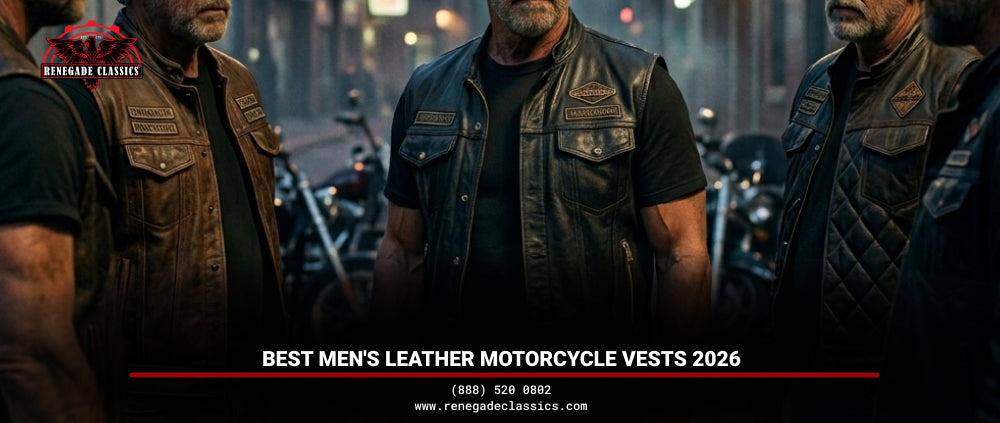
A leather vest is one of those pieces of gear you buy once and ride with for years. It's not just an extra layer. It's part of how a serious biker shows up on the road. Whether you're riding in a club, running solo on the highway, or packing for a long-distance tour, the right leather biker vest carries your patches, holds your gear, and takes a beating without quitting.
Renegade Classics has been fitting riders in quality leather gear for over 35 years. This guide is built from that experience. We'll break down every leather grade we carry, how pocket configurations match real riding styles, what to look for in fit and hardware, and which vests stand out in 2026. No filler. Just what riders actually need to know.
Top Men's Leather Motorcycle Vest Styles at Renegade Classics in 2026
Renegade Classics has decades of experience in leather motorcycle gear. Here are the best categories that consistently perform best for riders.
Motorcycle Club Vests
Motorcycle Club Vests are built for riders who need a clean back panel for patches, rockers, and club identity. These vests focus on structure, strength, and long-term wear, making them a standard choice in MC culture. Harley-Davidson riders typically reach for Cow Natural 1.5mm club-style vests. The wide, flat back panel handles full chapter patches and rocker placement without distorting the design.
Western Motorcycle Vests
Western Motorcycle Vests carry a more relaxed, traditional look with design cues pulled from denim and cowboy styling. They suit riders who want a casual feel without losing real leather durability.
Cruiser Motorcycle Vests
Cruiser Motorcycle Vests are made for comfort-focused riding. They are lighter, easier to move in, and work well for long hours on open roads where flexibility matters more than heavy structure.
Utility Motorcycle Vests
Utility Motorcycle Vests are built around function. They include practical pocket layouts, concealed carry options, and everyday storage for riders who treat the vest as working gear, not just riding apparel.
Vintage Motorcycle Vests
Vintage Motorcycle Vests bring in aged textures, classic cuts, and old-school detailing. These are chosen by riders who prefer a worn-in aesthetic that feels closer to traditional motorcycle heritage.
Classic Motorcycle Vests
Classic Motorcycle Vests stay close to the original biker vest design. Clean lines, simple construction, and dependable leather grades make them a timeless option that works across riding styles.
Why Leather Vests Are Still the #1 Choice for Bikers
Walk into any major rally, Sturgis, Daytona, Laconia, and you'll see the same thing. Leather vests everywhere. That's not nostalgia. That's because leather keeps proving itself season after season, and no synthetic material has come close to replacing it for serious riders.
Leather vs. Textile
Leather outlasts most alternatives when you're talking about a vest worn hard and often. A quality cowhide or buffalo leather biker vest with 1.2mm to 1.5mm thickness resists wind, withstands friction, and holds its shape after years of heavy use. Textile and synthetic vests stretch, fade, and lose structural integrity faster, especially with regular sun and road exposure.
Cow Natural leather, which keeps the top layer of the hide intact, is the most durable option available. It doesn't crack or peel the way corrected grain or bonded materials do. You're not babying it. You're riding in it. And it handles that reality without falling apart on you.
Ages Better with Every Ride
This is the part textile can never compete with. A good men's leather motorcycle vest develops character over time. The grain settles. The surface takes on a patina unique to the miles you've put in. Goat Naked leather does this fast because there's no topcoat finish holding it back. Cow Natural and Buffalo grades develop their patina more gradually, building a look that gets better with every ride. That kind of aging doesn't happen with synthetics. Real leather tells a story.
Club Culture Connection
In the motorcycle community, a leather vest is a statement. The back panel is standard real estate for a club patch, chapter rocker, or personal insignia. Club-style leather vests are designed specifically with this in mind. Wide, flat back panels with clean stitching give embroidery and patches something solid to hold onto. Wearing a vest signals membership in a culture. It says you ride, you've ridden, and you plan to keep riding. Leather has been carrying that tradition for decades, and it's not changing in 2026.
What to Look for Before Buying a Men's Leather Vest
Not every leather vest is built the same way. The wrong pick means a vest that's uncomfortable on long rides, short on storage, or worn out in a couple of seasons. Knowing what separates a solid vest from a cheap one takes about five minutes of reading.
The sections below give you enough detail to make a confident purchase the first time, without second-guessing after the order ships.
1. Leather Type
The leather type determines everything from how the vest feels on day one to how long it lasts after ten years. It also determines what kind of vest gets built from it and what riding style it suits. At Renegade Classics, each leather grade is matched to a specific vest construction and rider use case.
Here's how each grade breaks down across leather type, vest type, and the riding style it's built for.
-
Cow Natural Leather
Cow Natural is the backbone of the traditional leather biker vest. Dense grain, tight fiber structure, and maximum abrasion resistance make it the go-to hide for club riding and highway miles. It's stiff on day one and loosens up with wear, molding to your body over time. If you're flying a full back patch or need a vest that holds its shape at speed, Cow Natural is where you start. Available in 1.5MM for maximum protection and 1.2MM for a lighter, more flexible daily option.
-
Cow Milled Leather
Milled leather undergoes a drum-tumbling process that breaks down the grain and gives the hide a relaxed, worn-in texture right out of the box. The result is a softer, more casual surface that pairs naturally with denim vest construction and the Western riding aesthetic. Riders who want a broken-in look without waiting two seasons for the leather to settle gravitate toward milled. It's a good fit for the rider who spends as much time at the bar as on the road.
-
Goat Naked Leather
Goat Naked has no topcoat finish. The grain is completely exposed, which means it breathes better than any cowhide option and moves freely with your body. That makes it the natural match for cruiser-style riding, where comfort and mobility matter more than heavy-duty protection. Lighter in weight and supple from day one, it layers well over a t-shirt in warm weather and develops a natural patina fast. A solid choice for summer cruiser riders who still want real leather on their back.
-
Lambskin Leather
Lambskin is the softest hide in the lineup. It drapes cleanly, feels premium against the skin, and pairs well with mesh vest construction where ventilation is part of the design. Utility vests built from lambskin are favored by riders who prioritize comfort and a clean, refined look over rugged road protection. Not the vest for hard club riding or heavy patch loads, but an excellent option for the rider who wants a lightweight, well-finished piece for everyday use and casual riding.
-
Buffalo Milled Leather
Buffalo Milled brings together the natural pebbled texture of buffalo hide and the softened, relaxed grain that comes from the milling process. The result is a vest made of serious leather. Thicker and more substantial than cowhide options, it carries an old-school look that pairs directly with vintage and classic vest styles. Break-in takes longer than the milled cow options, but once this leather settles, it holds structure for years. The vintage and classic riding communities have long reached for buffalo for exactly this reason.
2. Thickness
Thickness affects how a leather vest feels, how it moves, and how much protection it gives on the road. Riders often ask how thick a leather vest should be, and the answer comes down to riding style and conditions. Thicker leather offers better resistance to wind and abrasion, but takes longer to break in. Lighter leather feels easier from the start and works better in warm weather, though it won’t handle heavy wear as well.
Most riders choose a middle range that balances comfort with durability for daily use. Heavier builds suit long rides and highway speeds where structure matters more. Lighter options work well for short rides and warmer climates where flexibility is preferred.
3. Pocket Types
Pockets determine whether a vest is actually useful on the road. Most buyers don't think about pocket configuration until they're on the bike and realize their vest doesn't match how they ride. A concealed carry rider needs a holster-compatible inside pocket on the left interior. A touring rider needs a combination of zippered chest pockets, deep hip pockets, and a hidden security pocket sewn into the back lining for valuables.
An everyday rider usually gets by with an inside utility pocket for a phone and a couple of snap-close chest pockets for quick-access items. The right setup depends entirely on how and where you ride. For a full breakdown of every pocket style, placement, and use case, read our guide on Types of Motorcycle Vest Pockets before you buy.
4. Fit and Adjustable Laces
A men's leather vest with side laces is the most versatile option for fit. Side laces allow 2 to 3 inches of adjustable width, which matters for riders who fall between standard sizes or who layer differently by season. A vest that's dialed in with side laces sits snug enough to stay in place at speed and loose enough to layer over a shirt without binding across the back.
Club cut vests run true to size with a longer back hem. Fashion-cut vests may taper at the waist, limiting layering underneath. Know which cut you're buying before you order.
5. Hardware Quality
Hardware is the first thing to fail on a cheap vest. Snaps, zippers, and D-rings endure constant use and must withstand weather, vibration, and years of wear. On a quality vest, look for heavy-duty metal snaps with a tight, positive closure, YKK or equivalent zippers on all zippered pockets, and antique brass, gunmetal, or nickel hardware that resists corrosion over time. Reinforced stitching at all stress points, pocket openings, armholes, and shoulder seams tells you the vest was built to last. If the hardware rattles or sticks, the rest of the vest was built the same way.
Gear Up. Ride Ready
If you’re ready to buy, don’t guess on quality or fit. Go for a vest that matches your riding style, holds up over time, and feels right from day one.
Top 5 Men's Leather Motorcycle Vests at Renegade Classics
Renegade Classics has been building motorcycle gear, focusing on genuine leather, solid construction, and rider-first design. These five vests cover different riding needs, from concealed carry to club use, tall fits, and lightweight summer riding.
Product 1: Highway Jack Men’s Black Leather Motorcycle Vest
Highway Jack Men’s Black Leather Motorcycle Vest is designed for riders needing secure storage and comfort. It features concealed carry, utility pockets, durable cowhide, and adjustable side laces for a secure fit. Here to learn more about the product.
Product 2: Cool Edge Men’s Leather Biker Vest (Black)
Cool Edge Men’s Leather Biker Vest is made from Buffalo leather with a rugged, textured feel. It supports club patches on the back, includes snap pockets, and chrome hardware for a classic biker look. Here is to learn more about the product.
Product 3: Curated Men’s Tall Biker Leather Vest (Black)
Curated Men’s Tall Biker Leather Vest is made for taller riders with an extended front and back for better coverage while riding. Crafted from Cow CK 1.2MM leather, it offers a clean look, side laces for fit adjustment, and multiple pockets for storage. Here is to learn more about the product.
Product 4: Black Hide Men’s Tall Motorcycle Leather Vest
Black Hide Men’s Tall Motorcycle Leather Vest is designed for taller riders needing extra length and stability. It offers lower-back coverage. Made with firm leather that keeps its shape, it includes adjustable side laces and multiple pockets for layered riding.
Product 5: Liberty Knight Blaze Lowside Men’s Leather Vest
Liberty knight blaze lowside men’s leather vest is made for lightweight comfort in warm weather, with a simple design that avoids extra bulk. It retains the real leather's quality while improving airflow for summer rides. It also includes basic pocket storage and a clean, minimal look suitable for casual use.
Better Rides Start Here.
Ready for better rides and lasting quality? Choose your perfect fit today.
Leather Vest vs. Leather Jacket: Which One Do You Need?
This question comes up often, and the honest answer is that both have a place in a rider's gear setup. They serve different purposes in different conditions, and knowing when each one makes sense helps you get more out of both pieces.
The short answer: if you ride year-round in varying conditions, you eventually need both. If you're just getting started or riding in warmer climates, a vest is usually the smarter first buy.
When the Vest Is Better
A vest wins in warm weather. It gives your arms full freedom without the bulk of sleeves and vents heat far better than any jacket. For summer rides, rally events, and short city trips where full arm coverage isn't the priority, a men's leather motorcycle vest is the right call.
Vests are also better for displaying patches and club affiliation. The back panel on a vest is purpose-built for this, wide and flat in a way that jacket backs typically aren't. For concealed carry, most riders prefer a leather biker vest as well. The inside pocket sits closer to the body, and there's no sleeve bulk pulling the garment out of position during movement.
When the Jacket Is Better
A leather jacket is the right choice when temperatures drop or when you're riding in conditions where full arm coverage matters. A jacket offers significantly more protection in a slide because it covers the forearms, elbows, and shoulders, areas a vest leaves exposed. For multi-day tours through elevation changes or any conditions below 60 degrees, the jacket wins on protection and warmth.
Why Serious Riders Own Both
The two pieces work together. Many riders layer a vest over a jacket in cold weather, using the vest to carry patches and external pockets while the jacket handles insulation underneath. In warm months, the jacket gets packed, and the vest handles the daily work. Owning both isn't redundancy. It's having the right gear for the right conditions. That's how experienced riders actually ride.
How Should a Motorcycle Vest Fit? Quick Sizing Guide
A poorly fitted vest causes trouble on the road. Too loose, it flaps in the wind. Too tight, it restricts movement and layering. Getting the size right keeps your ride comfortable.
Chest Measurement
Measure around the fullest part of your chest, under the arms, over a t-shirt or riding base layer. Keep the tape snug, not tight.
Add 2 to 4 inches to your measurement for riding comfort. For example, a 44-inch chest should look for a 46–48-inch vest. This gives room to move and layer without pulling across the back.
For a deeper look, check this guide on how a motorcycle vest should fit.
Side Adjustment
Side laces adjust about 2–3 inches. Use them for small tweaks, not to fix sizing. Tighten or loosen evenly to avoid stress on the eyelets.
Common Mistakes
Measuring too tightly leads to a poor fit. Ignoring layering can make the vest feel restrictive. And don’t rely on Small/Medium/Large, always size by chest measurement.
How to Care for Your Leather Vest
Keeping your leather vest in shape comes down to three basics: clean it, condition it, and protect it from rain.
-
Wipe down after every few rides with a dry cloth
-
Use leather-specific cleaner only, no household soap
-
Air dry at room temperature, away from heat and sunlight
-
Condition every six to eight weeks with mink oil, neatsfoot oil, or Leather Honey
-
Buffalo Milled and Cow Natural need conditioning more often
-
Apply a water-resistant spray before the rainy seasons
-
Never wring, fold, or pack a wet vest
For denim vest care, the process is different. Read our full guide on How to Clean & Maintain a Denim Motorcycle Vest.
Find Your Vest. Ride Ready
You know your leather grades, your pocket setup, and how to size it right from the first order. Now it's time to get the right vest on your back.
Frequently Asked Questions (FAQs)
Q1: Can I add patches to my leather vest?
Yes. Leather vests have a flat back panel purpose-built for patches and club insignia. Use a heavy-duty needle and leather thread, or take it to a professional leather shop for clean, lasting results.
Q2: Is Cow Natural 1.5MM better than 1.2MM for riding?
Yes, for maximum abrasion protection. The 1.5MM is denser and tougher. The 1.2MM is better for all-day comfort and versatility across conditions.
Q3: How long does a leather motorcycle vest last?
With regular conditioning and cleaning, a quality leather vest lasts 10 to 20 years or more. Buffalo and Cow Natural grades tend to last the longest.
Q4: Can I wear a leather vest without a jacket in summer?
Yes. A leather vest over a long-sleeve shirt is a practical summer setup that protects your torso while keeping your arms free in the heat.
Q5: Is Goat Naked leather durable enough for regular riding?
Yes, for casual and warm-weather use. For club riding or high-speed highway miles, Cow Natural or Buffalo provides better overall protection.
Q6: What are the best leather vests for Harley riders?
Harley riders most often choose Cow Natural 1.5mm club-style vests. The dense grain holds its shape at highway speeds, the wide flat back panel carries full chapter patches cleanly, and the leather darkens and develops patina with regular use. Side laces let you dial in fit over a layering shirt or hoodie.
Q7: What is the best leather motorcycle vest for club riding?
For club riding, Cow Natural leather at 1.2mm to 1.5mm is the standard. Club-cut vests with a longer back hem, flat back panel, and reinforced stitching at stress points hold patches securely and last through years of hard wear. Look for heavy-duty metal snaps and YKK zippers.
Q8: What is the best leather motorcycle vest?
The best leather motorcycle vest depends on how you ride. For club riding and highway miles, Cow Natural 1.5mm is the strongest option. For summer cruiser riding, Goat Naked leather gives you the best comfort and airflow. For everyday utility use, a Lambskin vest with inside pockets and side laces covers most riders well.
Q9: What is the best motorcycle club vest?
A motorcycle club vest needs a clean, wide back panel for patches, reinforced seams, and heavy-duty hardware that holds up over years of use. Cow Natural leather at 1.5mm is the most common choice in MC culture because it holds structure, resists wear, and develops a look that gets better over time.


