

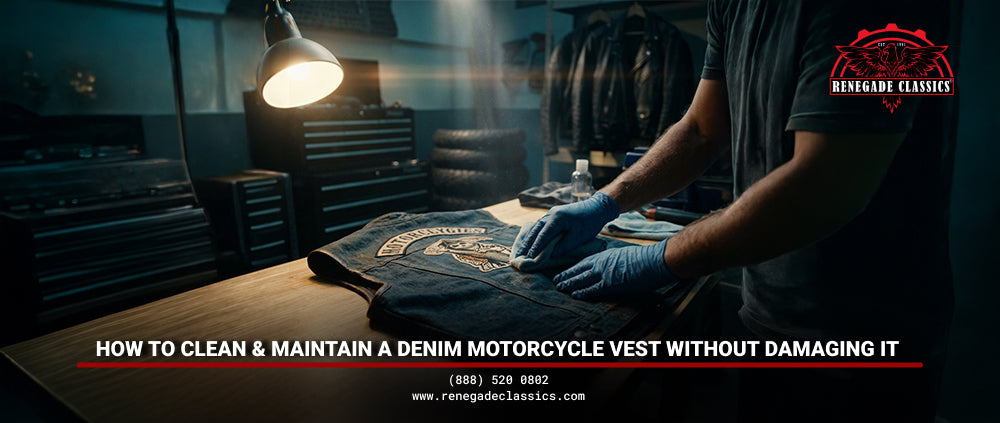
Your denim motorcycle vest has been through a lot: dusty highways, long summer rides, oil mist from the engine, and years of memories stitched into every patch. Over time, this mix settles deep into the fabric, making simple washing methods less reliable.
Cleaning denim motorcycle vest pieces also comes with added risk. Lots of biker vests carry patches, embroidery, or stitched club symbols that can become loose, worn out, or distorted when handled improperly. Strong detergents, hot water, and rough cycles may harm both these details and fabric.
This is why it is important to learn how to clean a denim vest in the correct way in order to preserve the shape, color, and structure of the vest. With proper care, a vest lasts longer and keeps its rugged, broken-in feel.
What is a Denim Motorcycle Vest Made Of?
Before cleaning anything, you should be aware of what you are dealing with. Motorcycle denim vests are not standard denim. They are heavier and tighter-woven and usually reinforced in stress areas to handle wind resistance and long hours in the saddle. That construction changes how the fabric responds to water, detergent, and friction.
Types of Denim Used in Motorcycle Vests
The two types of denim used primarily to make motorcycle vests are:
- Raw denim comes in an untreated form with a stiff feel. It reacts strongly to water, often shrinking or developing uneven fades when exposed to detergent or machine washing.
- Pre-washed denim goes through a softening process before stitching, so it behaves more predictably, but friction can still affect its surface texture during cleaning cycles.
When you understand the fabric, you can clean the vest without damaging its form.
Common Features That Affect Cleaning
The majority of the biker vests have additional designs and functional features over the primary fabric. These may be sewn patches, embroideries, metal studs, reinforced buttons, and linings. Each element reacts differently when exposed to water and movement during washing.
Embroidery and patches can be loose when they are touched roughly. When moisture interacts with metal parts, they leave marks or corrosion. Inner linings can trap water, which leads to uneven drying and stiffness. These facts render cleaning a denim biker vest more sensitive than regular denim clothes.
Why Improper Cleaning Causes Damage
Strong detergents and hot water damage denim fibers, weaken stitching, and accelerate color loss over time.
With time, such stress will cause seams to weaken, lift patches, and generally impact the structure. Metal parts can also lose their finish or begin to stain surrounding clothes. These problems often appear when proper steps for care are ignored.
Ride Strong in Denim Style
Explore our men’s denim vest collection designed for protection, comfort, and everyday riding wear.
How to Clean a Denim Motorcycle Vest: Step by Step
Jumping straight into washing without preparation is one of the most common mistakes riders make. A few minutes of preparation before any water touches your vest will protect it during the cleaning process and reduce the risk of permanent damage.
Inspecting for Stains, Tears, and Loose Elements
A full check of the vest will determine weak areas before the water can reach the fabric. Little oil spots, sweat spots, or mud stains should be located early so they can be treated without harsh scrubbing later. Tears around seams, loose threads, or lifting patches also need attention.
Fixing or securing these areas before washing reduces the chance of further damage during movement in water. A loose patch, for example, can detach completely if it goes unnoticed during a wash cycle. This step supports safer cleaning of denim motorcycle vest routines by reducing avoidable wear.
Reading Care Labels and Manufacturer Instructions
All the vests are labeled with the care label, and it should always be checked before cleaning. These instructions are based on the fabric type, the stitching procedure and the added materials used in production. Some vests can tolerate machine washing, and others require only hand cleaning or spot treatment.
Ignoring these instructions can lead to shrinkage or fading that cannot be reversed. Even strong denim reacts differently depending on treatment, so label guidance takes priority over general cleaning habits.
Removing Surface Dirt Without Washing
Brush off dust with a soft brush before washing. This reduces wear and limits how often you need to wash the vest.
Things Needed for Cleaning a Denim Vest

You don't need specialized products, just the right versions of common items:
- Mild Detergent: Look for a gentle, pH-neutral formula. Laundry Detergent, or any labeled “delicate” or “gentle” will work. Avoid anything with bleach, brightening agents, or heavy fragrance.
- Soft Brush or Cloth: For blotting stains and drying excess moisture. An old toothbrush or a dedicated garment brush works well for loosening surface dirt and treating localized stains.
- Cold Water: Water above 30°C (86°F) accelerates color loss and increases shrinkage risk.
- Basin or Washing Machine: Basin allows gentle hand washing and stain control; washing machine suits light cleaning using delicate cycle and cold water only.
Now that you understand how the fabric behaves, the cleaning process becomes easier to manage.
6 Cleaning Methods for a Denim Motorcycle Vest.
Different riding conditions leave behind dust and sweat on the vest; each needs a different approach. The aim of cleaning denim vest methods is not just removing dirt but also protecting stitching, color, and detailing so the fabric stays in good shape over time.
Method 1: Hand Washing (Safest Everyday Method)
Hand washing is the safest option for regular cleaning. It gives full control over pressure and movement, which helps protect patches and seams. A tub of cold water mixed with mild detergent is enough for light cleaning. The vest should be soaked briefly, then gently pressed instead of scrubbed.
This method suits regular maintenance after short rides or light exposure. It reduces stress on fibers and keeps the shape stable over time.
Method 2: Machine Washing (Use Only When Needed)
Machine washing should only be used when the vest is heavily soiled and the care label allows it. A gentle cycle with cold water is the safest setting. The vest should be placed inside a laundry bag to reduce friction.
Harsh spinning can distort shape and loosen stitching, especially around shoulders and pockets. This method is not ideal for vests with heavy detailing or structural reinforcement.
Method 3: Spot Cleaning (Small Stains)
Spot cleaning works for targeted marks like oil drops, sweat patches or dirt spots. A soft cloth dipped in mild detergent solution can be used to dab the affected areas.
Rubbing should be avoided because it pushes stains deeper into the fabric. This method helps maintain color consistency and reduces the need for full washing cycles.
Method 4: Dry Cleaning (Premium or Decorated Vests of a heavy nature)
Dry cleaning is best for vests with heavy embroidery, metal studs, or complex patchwork. Professional cleaning reduces the risk of damage to decorative elements and maintains overall structure.
This option is often used for high-end gear where fabric integrity and detailing matter more than frequent washing.
Method 5: Steam Cleaning (To freshen odor and light)
Steam helps remove odor without soaking the fabric. Steam loosens embedded particles in the fabric and refreshes the vest without saturating it with water.
This is an effective process between washes, particularly with those riders who wear their gear every day. Steam can reduce surface bacteria if it's hot enough.
Method 6: Air Refreshing (No-Wash Maintenance Method)
Air refreshing is an easy maintenance procedure. Hanging the vest in the open air allows natural airflow to remove mild odor and moisture. It is useful after short rides where no visible dirt is present.
Avoid direct sunlight for long hours since it can fade the color over time.
Hand Wash vs Machine Wash

Most denim vests can be washed by hand. It provides complete command of pressure, water temperature, and movement, which assists in safeguarding stitching, biker patches, and wilted finishes. It is ideal for routine cleaning, light colored stains and vests that are embroidered or detailed.
Only in case the care label allows the vest to be washed in a machine, machine washing should take place when the vest is very dirty. The cold water cycle is gentle and less stressful, but still, friction within the drum may have an impact on the shape and loose threads with time. The laundry bag would be a good idea to minimize direct contact, although it does not eliminate the risk.
To wear long-term, hand washing can be helpful in keeping the fabric under control, whereas machine washing can be used in exceptional cases.
Post-Wash Care and Drying
The answer to the question of what happens after washing is as important as the washing process. Wet denim is heavy and gravity stretches and responds to heat and air. Bad drying options may alter fit, add rigidity, and decrease the lifespan of the vest in general. Good how-to-dry denim vest practice emphasizes the shape control and even-release moisture.
Proper Air-Drying Methods
Machine drying should never be used instead of air-drying. Two methods operate on the basis of the condition of the vests.
When the vest is slightly wet, hanging is the best option. It must be placed on a broad hanger so as to maintain the shoulder shape and keep it from being strained. This maintains structure and prevents the formation of folds in undesirable places.
Flat drying is more efficient with heavy or completely wet vests. Placing it on a clean towel will ensure that the weight is spread evenly and the fabric will not drag down. It also prevents stressed seams during drying.
Avoiding Direct Sunlight Damage
Denim is vulnerable to uneven fading in direct sunlight. Darker parts tend to fade away more rapidly, and the fabric has patchy colors. It is more apparent on black or dark indigo vests, where the consistency of dye is important.
Color is better preserved by drying in the shade, outside. Proper airflow accelerates drying without subjecting the dye to heat, which causes dye particles to break apart during drying.
Restoring Softness After Drying
After the vest dries, the denim can stiffen, particularly when washed in cold water or allowed to dry flat. Wearing light clothing will assist in the fabric loosening in the natural process because body movement will soften the fibers.
A slight pass of steam can also be used to relax the material without the need to soak it once more. When exposed to gentle heat, it is used to restore the flexibility, but without depleting the structure.
Find Your Riding Vest
Our high-quality motorcycle vest collection is designed for riders
Everyday Maintenance Tips for a Denim Riding Vest
Small daily habits keep a vest in better condition and reduce the need for frequent washing. These tips focus on protecting fabric strength, color, and fit while keeping the vest ready for regular rides.
-
Wash only when needed
Washing the denim frequently accelerates the fading and weakening of the denim fibers. Wash only when the dirt or smell develops.
-
Use cold water for cleaning
The cold water preserves the fabric's structure and minimizes the chances of the cloth shrinking when being washed.
-
Pick a mild detergent
Denim fibers are destroyed by harsh detergents. A gentle formula keeps the material stable over time.
-
Turn the vest inside out before washing
This reduces friction on the outer surface and works to preserve visible surfaces such as patches and stitching.
-
Protect stitched details during washing
Wash in a mesh laundry bag or handle to ensure no strain on embroidery and patchwork.
-
Avoid dryer use
Dryers can cause heat, which in turn will shrink denim and distort its shape. Air drying keeps the fit stable.
-
Reset shape after washing
While the vest is still damp, smooth out seams and align shoulders to maintain proper structure.
-
Air out after rides
Hanging the vest in the open air helps release sweat and odor, reducing the need for frequent washes.
Best Storage Tips
-
How to Store the Vest: Use a sturdy hanger to maintain shoulder shape and prevent fabric sagging during storage.
-
Odor Build-Up Prevention: Always air the vest before storing to remove moisture and avoid long-term odor and fabric damage issues.
-
Folding vs Hanging: Hanging is used to preserve structure of the garment in the long-term storage case, whereas folding is used in the short-term to prevent deep permanent creases.
-
Breathable Covers: Store the vest in a cloth cover to allow airflow and protect it from dust without trapping moisture.
Common Mistakes to Avoid When Cleaning a Denim Vest

Even minor cleaning mistakes might reduce the longevity of a vest. Most damage builds slowly through repeated bad habits rather than a single wash. Knowledge of such mistakes helps protect fabric strength, color, and stitched details.
Overwashing and Overhandling
Washing often wears down denim fibres and speeds up fading. Overhandling during cleaning also makes seams loose and stretches the fabric. Over time, the vest loses its original fit and structure.
Harsh Chemicals or Hot Water
Strong detergents, bleach, and fabric softeners destroy the texture and the stitching of denim. Hot water speeds up color loss and can shrink the fabric. All these decrease durability and visual quality.
Fix Small Repairs Before Washing
During washing, loose threads, weak seams, or lifted patches are exacerbated. These points are torn or detached by water and movement, and would have been prevented with simple pre-fix care. So, repair the loose threads and weak seams before washing.
Storing in Wrong Conditions
Storing a vest in damp or hot conditions leads to odor buildup, fabric weakening, and mildew growth. Always keep it in a cool, dry, well-ventilated space to protect the material, preserve the stitching, and maintain its shape over the long term.
Conclusion: How To Maintain Your Denim Motorcycle Vest
A denim motorcycle vest does not need to be cleaned frequently and at a high level; it should be taken care of every day. Small routines such as airing it after rides, treating the stains immediately and not using harsh washes make the fabric more consistent to be used longer.
Over time, repeated rough washing does more harm than good. Fit and color can be maintained by controlled cleaning, proper drying and safe storage. A neatly maintained vest provides its shape, maintains patches in a better position, and ensures its riding-ready feel without deteriorating prematurely.
Where to find Quality Vests? Renegade Classics carries a range of riding gear designed for daily use and long-term wear. Whether you ride in a Men’s denim vest or prefer the durability of a Men’s leather vest, each piece is built with the kind of construction that holds up well with the right care routine outlined above.
Frequently Asked Questions
How often should you wash a denim motorcycle vest?
Clean up after heavy use, visible stains or when there is a strong odor, which is normally after a long period of use. Washing should not be done frequently.
How to wash a denim vest?
Wash with cold water and a light detergent. Hand washing will be safer, whereas machine washing can only be done on soft cycles as per the care label.
How to store a denim vest properly?
Store it on a strong hanger in a well-ventilated area. Storage should not be damp; instead, breathable covers need to be used.
Can I machine wash a denim biker vest?
Yes, although not otherwise permitted by the care label. Wash with a cold, gentle cycle and a laundry bag to minimize risk of damage.


