

Key Takeaways
- The denim shirt in motorcycle culture shares roots with the denim jacket and vest that preceded it: all three trace to the same American workwear tradition in which denim was the standard fabric for durable labor clothing in the late 19th and early 20th centuries.
- Denim entered motorcycle culture through two paths simultaneously: as surplus military and workwear jackets that early club riders wore and cut down into vests, and as the Western snap-button shirt that was already standard casual dress across the American working-class tradition that biker culture drew from.
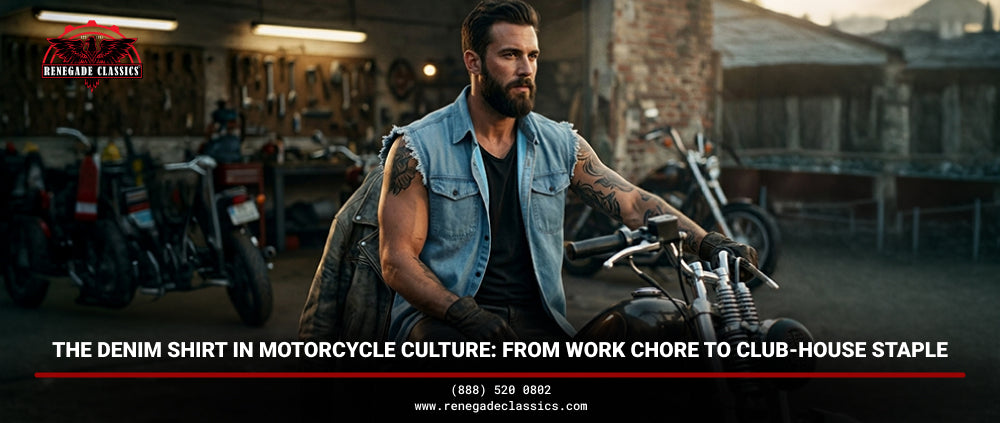
- The denim shirt occupies a specific position in the biker wardrobe distinct from the denim vest. Worn with sleeves, it functions as both a standalone shirt and an open outer layer over a tee, offering the patch display capability of the vest format when worn open with the coverage of a shirt when buttoned.
- The denim shirt's position in biker culture is quieter than the leather vest or the graphic tee, communicating working-class American identity and riding alignment through material and form rather than through graphic content or patch display.
- Today the denim shirt is a consistent presence in Harley and cruiser culture as a versatile mid-layer option that bridges warm-weather single-layer wear and cooler layering contexts.
The denim shirt in motorcycle culture did not arrive through a single definitive moment the way the leather jacket did with Marlon Brando or the graphic tee did with the rally circuit. It arrived the way most durable garments arrive in a culture: as practical workwear already being worn by the people who formed that culture, recognized over time as fitting the aesthetic and functional needs of the riding life.
Denim's American Workwear Foundation
Denim as a fabric has been central to American workwear since Levi Strauss & Co. introduced riveted denim work pants in 1873. The fabric, a sturdy cotton twill, was chosen for the same qualities that eventually made it a biker staple: durability under hard use, resistance to abrasion, and an ability to hold its form through extended wear and repeated washing.
The denim jacket entered American workwear in the late 19th century as a companion to the work pant. Levi's introduced a riveted denim "Triple Pleat Blouse" in 1880 — an early version of what became the classic American denim jacket. Carhartt's chore coat, introduced in 1923, established the heavier canvas-and-denim work jacket as a distinct American workwear category. These garments were worn by railroad workers, farmers, miners, and the expanding American industrial and agricultural workforce of the early 20th century.
The Western snap-button shirt, made from denim or denim-adjacent fabrics, entered American casual dress through the ranching and cowboy tradition of the American West. Brands like Wrangler developed snap-button Western shirts in denim and heavy cotton as the standard casual shirt for working men in western states. The Western shirt's connection to the same rugged American masculine identity that biker culture claimed as its own made it a natural fit when motorcycle clubs began developing their visual vocabulary.
How Denim Entered Motorcycle Club Culture
The Cut and the Surplus Jacket
The most documented route by which denim entered motorcycle club culture was through the denim jacket cut. Returning World War II veterans and early motorcycle club riders in the late 1940s wore military surplus and workwear jackets, including denim jackets, as everyday riding and social wear. As club identity developed, some riders removed the sleeves from their denim jackets to create the vest format that allowed for patch display on the back and front panels.
The Heddels source on biker cut history notes that early biker cuts "began as denim, then leather" — suggesting denim preceded or ran parallel to leather in the earliest development of the patched vest as a club identity garment. Whether denim or leather came first in any specific club context varied. Both were in use in the late 1940s and early 1950s.
The denim cut, worn over a leather jacket or layered on a flannel and t-shirt depending on the season, was the primary patch display surface in early motorcycle club culture before leather vests became more common. The denim provided a lighter and more affordable alternative to leather that could be obtained through surplus channels or general workwear retail.
The Western Shirt Connection
The denim shirt with sleeves, as opposed to the sleeveless cut, entered biker culture through a different path: the Western snap-button shirt tradition already embedded in American working-class casual dress.
American motorcycle culture in the Harley and cruiser tradition has always had significant overlap with Western and cowboy culture. Both draw from the same working-class American masculine identity tradition, the same geography in many cases, and the same visual aesthetic of rugged, durable materials and functional design. The Western denim shirt, with its snap buttons, chest pockets, and sturdy construction, was already being worn by the same demographic that formed the riding community. It required no adoption effort. It was simply already there.
The snap-button closure of the Western shirt has specific practical utility in a riding context: no button can pull off or catch on gear the way a traditional button can. The shirt can be opened and closed quickly without the fumbling that button manipulation requires in gloves. These functional advantages reinforced the natural aesthetic alignment.
The 1960s and the Expanded Denim Culture
Through the 1960s, as motorcycle club culture expanded and the counterculture movement embraced denim as the fabric of anti-establishment identity, denim shirts and jackets became more prominently visible in both club culture and the broader riding community. Films like Easy Rider (1969) showed riders in denim jackets and shirts alongside leather, establishing both as valid visual elements of the biker aesthetic.
The hippie movement's embrace of denim in the late 1960s temporarily created some aesthetic tension in biker culture, where denim was simultaneously being claimed by counterculture and by the more outlaw-adjacent riding community. Both claims were legitimate. Denim was flexible enough as a cultural material to serve multiple countercultural identities simultaneously.
The Denim Shirt's Specific Role in the Biker Wardrobe
The denim shirt with sleeves occupies a position in the biker wardrobe that neither the denim vest nor the graphic tee fully covers:
- As a standalone shirt: Buttoned or snapped closed, the denim shirt functions as a standalone outer shirt in warmer conditions. It provides more coverage and structure than a t-shirt while being less warm than a flannel. In the biker wardrobe it occupies the warm-weather shirt position for riders who prefer the rugged denim aesthetic to the graphic tee.
- As an open outer layer: Worn open over a graphic tee, the denim shirt functions as a cover layer that adds rugged casual aesthetic without the heat of a flannel. This open-shirt-over-tee combination is a consistent look in Harley and cruiser casual wear that bridges warm and transitional temperature contexts.
- As a patch display surface: Some riders wear denim shirts with patches and pins sewn directly onto the back and front panels, using the shirt as a lighter patch display alternative to the leather vest. This is less common than the vest format but represents a continuation of the original denim cut tradition in shirt rather than vest form.
- As a mid-layer: Under a leather vest or jacket, a denim shirt provides warmth and coverage without the bulk of a flannel. Its lighter weight and structure sit cleanly under a vest in a way that a flannel sometimes does not.
What the Denim Shirt Communicates in Biker Culture
The denim shirt communicates a specific register of biker identity distinct from the graphic tee or the leather vest. It says:
- Working-class American identity through material. Denim is the fabric of American physical labor. Wearing it in a motorcycle context connects the rider to the tradition of working-class craftsmanship and rugged outdoor activity that biker culture has always claimed.
- Alignment with the Western and frontier tradition. The snap-button Western denim shirt connects to the cowboy and ranching culture that shares aesthetic and geographic overlap with the American biker identity.
- Understatement within biker culture. The denim shirt does not shout identity through a graphic design or announce community membership through patches. It communicates through material and form, a quieter but recognizable signal within the culture.
For the full guide to denim motorcycle shirts as a garment category, including styling and what to look for, see the men's denim motorcycle shirts guide.
What to Read Next
- Men's denim motorcycle shirts guide covers what to look for in a quality denim motorcycle shirt and how to style it in the riding wardrobe.
- History of biker style guide covers the full history of how shirts, flannels, and graphic tees became identity markers in American motorcycle culture.
- Why bikers wear flannel guide covers the parallel history of flannel's entry into motorcycle culture from the same workwear tradition.
The Bottom Line
The denim shirt in motorcycle culture arrived through two paths: the cut-down denim jacket that early club riders wore as a patch display surface, and the Western snap-button denim shirt that was already part of the working-class American casual dress tradition that biker culture drew from. Both paths led to the same place: denim as a fabric with deep roots in both American working-class identity and the specific visual tradition of motorcycle culture.
The denim shirt today occupies a quieter but consistent position in the biker wardrobe, communicating rugged working-class identity through material and form rather than through graphic content, and serving as a versatile shirt option that moves between standalone casual wear and mid-layer riding contexts.
Browse men's denim shirts at Renegade Classics for denim motorcycle shirts built on this tradition.
Frequently Asked Questions
How did denim enter motorcycle culture?
Denim entered motorcycle culture through two paths. The first was through military surplus and workwear denim jackets that early post-World War II club riders wore and in some cases cut the sleeves from to create the vest format that allowed for patch display. The second was through the Western snap-button denim shirt that was already part of the working-class American casual dress tradition the same demographic that formed motorcycle clubs was already wearing. Both paths reflect denim's deep roots in American working-class workwear culture rather than any specific adoption decision.
What is the difference between a denim shirt and a denim cut in biker culture?
A denim cut, or vest, is a sleeveless garment — historically made by cutting the sleeves from a denim jacket — that serves as the primary patch display surface in motorcycle club culture. A denim shirt has sleeves and functions as a standalone shirt, open cover layer, or mid-layer depending on conditions. The shirt can also serve as a patch display surface when worn open with patches on the back, though this is less common than the dedicated vest format.
Why do some riders prefer a denim shirt over a flannel?
The denim shirt occupies a different position than the flannel in the riding wardrobe. It is typically lighter than a heavy flannel and provides a different visual aesthetic — the rugged workwear and Western tradition of denim rather than the working-class casual tradition of plaid flannel. In warmer conditions where a flannel would be too heavy, a lighter denim shirt provides coverage and structure with less heat. The snap-button closure also has specific practical advantages in a riding context over traditional button closures.
What does the snap button on a Western denim shirt have to do with motorcycle riding?
The snap-button closure common on Western-style denim shirts has practical advantages in motorcycle riding compared to traditional button closures. Snaps can be opened and closed quickly without the fine motor manipulation that buttons require, which matters in gloves or in cold conditions. A snap that pulls free under stress releases cleanly rather than pulling the fabric or leaving a hole, which is more practical in an active riding context. The Western denim shirt's adoption in biker culture reflects both aesthetic alignment with the cowboy and ranching tradition and these functional advantages.
How is the denim shirt worn in biker culture today?
The denim shirt is worn in several ways in contemporary Harley and cruiser culture. As a standalone shirt in warm conditions, buttoned closed. As an open outer layer over a graphic tee, providing coverage and rugged casual aesthetic without the heat of a flannel. As a mid-layer under a leather vest or jacket in transitional or cooler weather. Some riders also wear denim shirts with patches sewn directly onto the back panel, continuing the tradition of using denim as a patch display surface in shirt rather than vest format.


