

Key Takeaways
- Skull graphics have been a defining visual element of biker culture since the late 1940s, when returning World War II veterans formed the first organized motorcycle clubs and carried military skull insignia into their new civilian riding identity.
- The skull's staying power in biker fashion comes from what it communicates within the culture: acknowledgment of mortality without fear, alignment with a dangerous lifestyle chosen deliberately, and a visual signal that sets riders apart from conventional society.
- The Hells Angels Death's Head emblem, introduced in the late 1940s and early 1950s, played a major role in establishing the skull as a defining symbol of organized biker culture. When Harley-Davidson introduced the Willie G skull logo decades later, it further cemented the skull's place in mainstream motorcycle culture.
- The skull does not carry a single fixed meaning in biker culture. Different riders use it to express mortality acceptance, brotherhood, protection against death, equality in the face of death, or simply aesthetic alignment with the biker tradition.
- Skull graphics have expanded beyond the core riding community through film, television, and mainstream fashion, which has broadened their visibility while creating some tension within the culture between authentic use and commercial adoption.
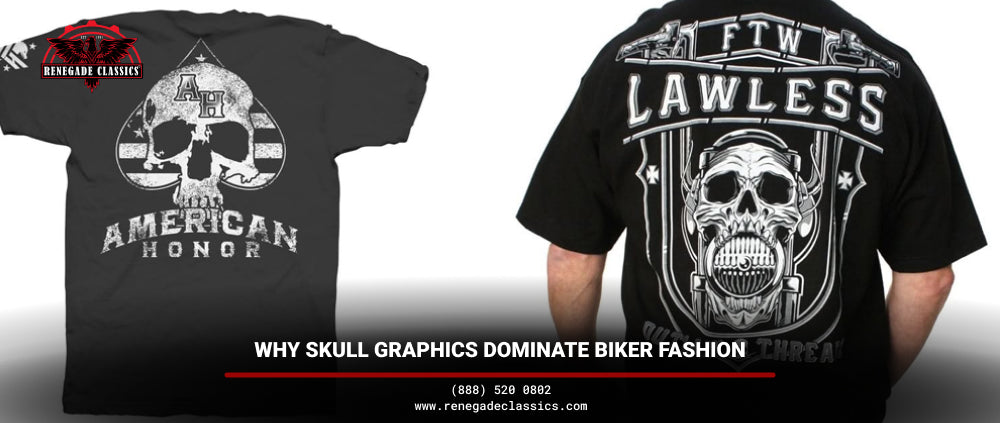
Why skull graphics dominate biker fashion is a question with a specific historical answer and a more complex cultural one. The historical answer starts with World War II veterans and the clubs they formed. The cultural answer involves what the skull came to mean within those clubs, how that meaning spread, and why it has remained central to biker visual identity across every generation of riders since.
The Historical Origin: Post-WWII Veterans
The skull's prominence in biker culture traces directly to the late 1940s, when veterans returning from World War II formed the earliest organized motorcycle clubs in the United States. These veterans carried with them the visual culture of the military, including skull insignia that had been used by various military units, particularly in aviation and armored divisions, as symbols of fearlessness and readiness to face death.
When these veterans formed motorcycle clubs, they drew on the visual language they knew. Skull emblems were already charged with meaning for men who had been to war. They transferred naturally into a new context that carried similar values: danger accepted, mortality acknowledged, brotherhood forged in shared risk.
The skull was not the only symbol these clubs adopted, but it proved to be among the most enduring. It communicated something fundamental about the biker identity that emerged from this post-war context: a confrontational relationship with death that was not nihilistic but deliberate, a refusal to pretend that riding motorcycles was without risk, and a willingness to name that risk rather than hide it.
The Hells Angels Death's Head and Mainstream Adoption
The Hells Angels motorcycle club, founded in 1948 in California, adopted a winged skull, commonly called the Death's Head, as their central emblem. The Death's Head drew directly from military skull insignia, and its adoption by one of the most prominent and visible motorcycle clubs of the era played a significant role in associating skull imagery with organized biker culture specifically.
As the Hells Angels became widely known through media coverage and film, the Death's Head became one of the most recognized symbols of the outlaw motorcycle club world. This visibility, even when the association was explicitly with outlaws rather than mainstream riding culture, helped establish the skull as a defining visual element of biker identity broadly.
Decades later, Harley-Davidson introduced what became known as the Willie G skull, designed by company executive Willie G. Davidson. The Willie G skull, which blends skull imagery with the Harley-Davidson eagle, represented a major commercial moment: the skull as biker identity symbol being incorporated into the brand identity of the dominant manufacturer in American cruiser culture. This move further cemented the skull's mainstream status within Harley and cruiser culture specifically.
What the Skull Means to Riders
The skull carries multiple meanings within biker culture, and different riders draw on different aspects of those meanings. The most consistently cited interpretations across the culture:
- Mortality acknowledged: Motorcycling involves genuine physical risk. The skull is understood within the culture as a direct acknowledgment of that risk, a statement that the rider knows death is possible and rides anyway. It is not a celebration of death but an acceptance of its presence.
- Protection: A widespread belief across multiple biker communities holds that wearing a skull serves as protection against death, specifically the idea that death will not come twice for someone who already carries its emblem. Whether held literally or as symbolic practice, this protective interpretation is well-established in the culture.
- Equality: Death equalizes. Regardless of wealth, rank, or status in life, everyone ends as the same bones. This equalizing quality of the skull aligns with biker culture's ideological emphasis on brotherhood that cuts across social class and hierarchy.
- Rebellion and separation: The skull signals non-conformity. It communicates that the wearer is not oriented toward conventional social approval and is willing to embrace an aesthetic that mainstream culture has historically associated with danger and outsider status.
- Brotherhood and belonging: Within organized riding groups, the skull serves as a visual recognition signal, identifying fellow riders and members of the same community. It marks insider status and shared values.
Film, Television, and the Expansion of the Symbol
The skull's prominence in biker culture expanded significantly through mid-20th-century film and television. Movies from the 1950s through the 1970s, which frequently depicted motorcycle clubs as rebellious or dangerous outsiders, established skull imagery as a visual shorthand for the biker character in American popular culture.
This media amplification worked in two directions: it made the skull-biker association familiar to general American audiences who had no direct contact with motorcycle clubs, and it reinforced the appeal of the symbol within the riding community as an authentic badge of the identity they were living.
More recently, television programs like Sons of Anarchy brought skull-laden biker aesthetic to an even wider mainstream audience. This expanded visibility has made skull graphics familiar well beyond the riding community, which has had the effect of broadening the symbol's accessibility while creating some tension within the culture between riders who see widespread commercial adoption as diluting authentic meaning and those who see the broader reach as a natural evolution of the symbol.
Why the Symbol Has Stayed
Across all of these developments, spanning more than seventy years of motorcycle culture history, the skull has remained the central graphic in biker fashion. The reasons it has stayed are the same reasons it arrived: it communicates something fundamental that no other image captures as directly.
Eagle graphics communicate patriotism. Flames communicate speed. Vintage motorcycle silhouettes communicate heritage. The skull communicates the relationship with mortality that is specific to motorcycle riding, the acknowledgment that every rider carries. That specific meaning is not easily replicated by any other symbol, which is one reason no other graphic has displaced it as a defining image of biker culture despite decades of other designs emerging alongside it.
For the full catalog of graphic design categories with long-term staying power in biker culture, see the timeless biker designs guide.
What to Read Next
- Timeless biker designs guide covers the ten biker shirt graphic design categories with the longest track record of staying power, including skull graphics in context with other classic designs.
- Versatile biker graphics for everyday wear guide covers which graphic categories travel furthest into everyday casual contexts.
- Men's motorcycle t-shirts guide covers the full range of biker graphic tee design styles and how to wear them.
The Bottom Line
Skull graphics have remained central to biker fashion for over seventy years because the skull communicates something specific and irreplaceable about the relationship between motorcycle riding and mortality. Its origins in post-WWII veteran club culture, its amplification through the Hells Angels and Harley-Davidson, and its spread through film and television have all contributed to making it the defining graphic of biker visual identity.
No other symbol in biker fashion has displaced it because no other symbol does what it does: name the risk, acknowledge the mortality, and communicate the deliberate choice to ride anyway.
Browse men's t-shirts at Renegade Classics for skull graphic biker tees in the classic tradition.
Frequently Asked Questions
Why do bikers wear skull graphics?
Skull graphics in biker culture carry multiple meanings, the most consistent being acknowledgment of mortality, a direct statement that the rider understands the risks of riding and accepts them. The skull is also used as a symbol of protection, equality in the face of death, brotherhood, and non-conformity with mainstream social values. Its use in biker culture traces back to post-WWII veteran motorcycle clubs that carried military skull insignia into their civilian riding identity.
When did skull graphics become part of biker culture?
The skull's presence in organized biker culture dates to the late 1940s, when World War II veterans formed the first motorcycle clubs and carried military skull imagery into their new identity. The Hells Angels, founded in 1948, adopted the winged Death's Head as their central emblem, which played a major role in establishing the skull as a defining visual element of organized motorcycle club culture. Harley-Davidson's introduction of the Willie G skull logo in later decades brought skull imagery into mainstream commercial motorcycle culture.
What is the Willie G skull?
The Willie G skull is a logo associated with Harley-Davidson, designed by Willie G. Davidson, a company executive and designer. It combines skull imagery with Harley-Davidson's eagle motif and became a commercial and cultural staple of Harley-Davidson branding. Its adoption by the dominant brand in American cruiser culture played a significant role in cementing the skull's mainstream status within Harley and cruiser riding identity.
Does wearing a skull graphic mean anything specific?
Not a single fixed meaning. Different riders draw on different aspects of skull symbolism. Common interpretations include acknowledgment of mortality, protection against death, equality across social status, non-conformity, and brotherhood or community belonging. A skull graphic on a biker tee communicates general alignment with the biker aesthetic tradition more than any single specific message.
Are skull graphics specific to outlaw biker culture?
No. While skull graphics were initially associated with outlaw motorcycle clubs in the post-WWII era, they have become widely used across the full spectrum of riding culture, from organized outlaw clubs to casual Harley riders to weekend cruiser riders with no club affiliation. Harley-Davidson's commercial adoption of skull imagery through the Willie G skull specifically moved the symbol into mainstream motorcycle culture. Today, skull graphics appear on apparel worn by riders across the full range of motorcycle culture contexts.


