

Key Takeaways
- Vintage and modern are aesthetic registers, not entirely separate design categories. The same skull or eagle design can be executed in a vintage-inspired or contemporary style, and the execution communicates different things about the wearer.
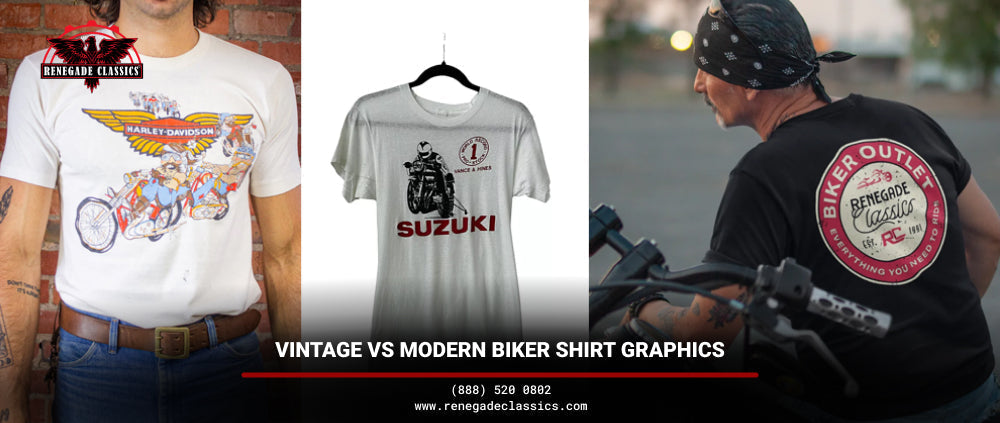
- Vintage biker graphics draw on retro typographic styles, distressed or worn printing effects, muted or earth-toned color palettes, and visual references to specific periods in biker culture history like the 1950s, 1960s, or 1970s.
- Modern biker graphics use clean vector art, high-contrast color schemes, bold contemporary typography, and sharper line work without the distressed or aged aesthetic of the vintage approach.
- Vintage aesthetics communicate connection to biker heritage, appreciation for the culture's history, and a preference for the craft and authenticity of earlier periods. Modern aesthetics communicate current cultural engagement and a forward-looking interpretation of the same identity.
- Neither vintage nor modern is inherently more authentic as biker style. The biker aesthetic has been contemporary in every era it has existed in. What feels vintage today was modern when it was created.
Vintage vs modern biker shirt graphics describes an aesthetic comparison, not a values comparison. Both draw from the same biker culture identity tradition. They differ in which visual language they use to communicate that identity and what that language says about the rider's orientation toward the culture.
What "Vintage" and "Modern" Mean in Biker Graphics
In the context of biker shirt graphics, vintage and modern refer to the visual execution style rather than the design subject matter. A skull graphic can be vintage or modern depending on how it is drawn and printed. An eagle graphic can be vintage or modern for the same reasons.
Vintage, in this context, means:
- Visual references to earlier eras of biker culture, particularly the 1950s through 1970s, when the foundational visual language of the culture was being established.
- Distressed, aged, or worn printing effects that simulate the look of a shirt that has been worn and washed many times.
- Muted, earth-toned, or sepia-tinted color palettes rather than high-contrast bright or pure black.
- Retro typographic styles including hand-lettered or woodblock-style fonts, arched or stacked text arrangements, and decorative border elements.
Modern, in this context, means:
- Clean, sharp vector art with precise line work and no artificial distressing.
- High-contrast color schemes with pure blacks, whites, and vivid accent colors.
- Contemporary typography including bold sans-serifs or current graphic design type conventions.
- Graphic design aesthetics that reflect the visual conventions of current popular culture rather than historical periods.
The Vintage Aesthetic
What Vintage Biker Graphics Look Like
A vintage biker graphic typically features one or more of these visual elements:
- Distressed or cracked print effects that simulate the wear pattern of older screen-printed graphics.
- Muted color palettes: burnt orange, faded red, olive, mustard yellow, or washed-out blue rather than pure, saturated versions of those colors.
- Retro typographic styles: hand-lettered script, slab serif fonts, ornate banner-and-shield arrangements, and arched text elements common in 1950s-70s commercial art.
- Visual references to specific historical biker culture periods: the knucklehead and panhead engine era, early club culture imagery, period-accurate motorcycle silhouettes.
- Aged or weathered backgrounds on the shirt itself, through mineral wash, enzyme wash, or other fabric treatments that give the shirt an older appearance before it has been worn.
What Vintage Graphics Communicate
A vintage biker graphic communicates:
- Connection to biker heritage and appreciation for the culture's founding periods. Wearing a vintage-aesthetic graphic is a statement of interest in where the culture came from, not just where it is now.
- Craft and authenticity. The vintage aesthetic evokes the hand-made, small-batch nature of earlier biker culture graphics when screen printing was a more manual and individual process.
- A preference for what the culture was before it became commercially widespread, which some riders interpret as a more authentic orientation than adopting contemporary design conventions.
When Vintage Works Best
Vintage biker graphics work particularly well in:
- Contexts where connection to biker culture history is part of the identity signal being communicated.
- Paired with other vintage or heritage-aesthetic pieces: aged leather, classic-era motorcycle apparel styles, and workwear fabrics.
- Off-bike casual wear where the worn, aged aesthetic reads as deliberately retro rather than as an old shirt that has not been replaced.
The Modern Aesthetic
What Modern Biker Graphics Look Like
A modern biker graphic typically features:
- Clean, precise vector art with sharp edges and consistent line weights.
- High-contrast color schemes: pure black on white, white on black, or graphic combinations with vivid accent colors.
- Bold contemporary typography without retro flourishes. Sans-serif or geometric typefaces rather than hand-lettered or ornate retro fonts.
- Design sensibility informed by current graphic art and tattoo art aesthetics rather than historical biker culture print styles.
- No artificial distressing or aging effects. The print looks sharp and new.
What Modern Graphics Communicate
A modern biker graphic communicates:
- Current engagement with biker culture identity through the visual language of contemporary design.
- Clarity and directness. A modern graphic reads at a distance with precision that a heavily distressed vintage graphic may not.
- A forward interpretation of the biker identity tradition: the same values, expressed in the visual language of the present rather than the past.
When Modern Works Best
Modern biker graphics work particularly well in:
- High-visibility event and rally contexts where the design needs to read clearly at a distance.
- Everyday casual wear where a sharp, fresh-looking graphic is preferred over a worn or aged appearance.
- Paired with cleaner, more structured contemporary biker apparel rather than heavily distressed or aged pieces.
The Crossover: Vintage-Inspired Modern Designs
The clearest demonstration that vintage and modern are aesthetic registers rather than entirely separate categories is the existence of the vintage-inspired modern design: a graphic that uses contemporary design tools and printing quality but deliberately references vintage visual elements.
A vintage-inspired modern skull graphic might use sharp vector art (modern execution) but choose the arched text arrangement, earth tone color palette, and shield or banner framing associated with mid-century commercial graphic design (vintage reference). The result reads as heritage-conscious without the actual distressing or wear simulation of a genuine vintage aesthetic.
This category of design has grown significantly and reflects the market reality that many riders want the cultural connection to heritage that vintage aesthetics provide without the visual limitation of a heavily worn or muted graphic.
Which Works Better for Everyday Wear
Both aesthetic registers work for everyday casual wear, but they communicate somewhat differently in mixed audiences:
- Vintage graphics: Read as deliberately retro and heritage-conscious in everyday settings. They travel well because the worn, aged aesthetic is broadly understood as an intentional style choice across American casual culture, not only within biker communities.
- Modern graphics: Read as clean graphic design in everyday settings. A sharp modern skull or eagle graphic communicates the biker aesthetic directly and is legible at a glance without the context of a worn effect to interpret.
Neither is more versatile for everyday wear in an absolute sense. The choice depends on which visual register matches the rider's overall aesthetic approach.
Building a Wardrobe That Includes Both
A wardrobe that includes both vintage and modern biker graphics has more range than one that commits exclusively to either aesthetic:
- Two to three modern graphic basics in the timeless design categories, skull, patriotic, brand, cover the widest range of contexts with clean, high-visibility graphics.
- One or two vintage-aesthetic pieces, particularly in the retro motorcycle silhouette or historical biker culture imagery categories, add heritage depth to the wardrobe and work particularly well for contexts where the connection to biker culture history is part of the identity signal.
- A vintage-inspired modern design bridges both registers and works across a wide range of wearing contexts.
For the full catalog of biker shirt design categories with long-term staying power, see the timeless biker designs guide.
For the comparison between patriotic and hardcore design traditions, see the patriotic vs hardcore biker designs guide.
What to Read Next
- Timeless biker designs guide covers the ten biker shirt design categories with the longest track record of staying power in both vintage and modern executions.
- Patriotic vs hardcore biker designs guide covers the comparison between two thematic design traditions that are distinct from the vintage vs modern aesthetic distinction.
- Versatile biker graphics for everyday wear guide covers which design categories travel furthest into everyday casual contexts.
The Bottom Line
Vintage and modern biker shirt graphics are aesthetic registers, not competing identities. Both draw from the same biker culture tradition. Vintage graphics connect to the heritage and founding periods of the culture through visual references to earlier eras. Modern graphics express the same identity through contemporary design language. Vintage-inspired modern designs bridge both.
Neither is more authentic. The biker aesthetic has always been contemporary in its own time. What reads as vintage today was the current aesthetic of its era. Build a wardrobe that includes both registers and cover the full range of biker graphic expression.
Browse men's t-shirts at Renegade Classics for graphic biker tees across vintage-inspired and contemporary design styles.
Frequently Asked Questions
What is the difference between vintage and modern biker graphics?
The difference is aesthetic execution, not subject matter. Vintage biker graphics use distressed or aged print effects, muted color palettes, retro typographic styles, and visual references to earlier eras of biker culture. Modern biker graphics use clean vector art, high-contrast color schemes, contemporary typography, and sharp print quality without artificial aging effects. Both can feature the same design subjects, skulls, eagles, motorcycles, and so on.
Are vintage biker graphics more authentic than modern ones?
No. The biker aesthetic has been contemporary in every era it has existed in. What reads as vintage today was the current visual language of biker culture when it was created. Modern graphics express the same biker culture identity through current design conventions, which is exactly what vintage graphics were doing in their own time. Neither aesthetic register is more authentic than the other.
What does a vintage biker graphic communicate?
A vintage biker graphic communicates connection to the culture's founding periods and heritage, an appreciation for the history of biker visual culture, and often a preference for craft and authenticity associated with earlier, more manual print production. It signals orientation toward where the culture came from rather than where it is now, which some riders find more meaningful as a personal statement.
What does a modern biker graphic communicate?
A modern biker graphic communicates current engagement with biker culture identity through contemporary design language. It expresses the same underlying values of the tradition, freedom, non-conformity, American riding identity, through a visual execution that reflects the design conventions of the present. It tends to read more clearly at a distance and in quick visual scans than heavily distressed vintage aesthetics.
Can I wear both vintage and modern biker graphics in the same wardrobe?
Yes. Most riders do not commit exclusively to one aesthetic register. A wardrobe that includes modern graphic basics for high-visibility contexts and vintage or vintage-inspired pieces for heritage connection covers more occasions with more range than a wardrobe limited to one aesthetic. A vintage-inspired modern graphic, which uses contemporary execution with retro visual references, is a particularly effective bridge between the two registers.


