

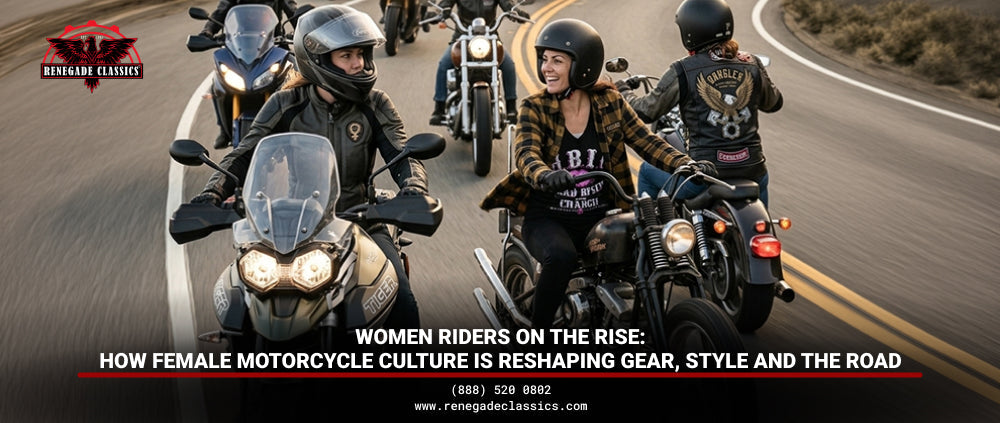
Key Takeaways
- Female motorcycle ridership has grown significantly over the past two decades and represents one of the fastest-growing segments of the riding population. Women now make up a meaningful and increasing share of motorcycle owners in the United States.
- The growth of female ridership has driven real market changes: more purpose-built women's riding gear, better fit options across all garment categories, and a shift away from the "shrink it and pink it" approach that characterized early women's motorcycle apparel.
- Female motorcycle culture has developed its own distinct character with all-female riding groups, women-focused rallies and events, and strong online communities that support new female riders and celebrate experienced ones.
- The Harley and cruiser riding community has been central to the growth of female motorcycle culture in the United States. Harley-Davidson actively cultivated female ridership through dedicated programs and female-focused events, which shaped the broader biker culture context for women riders.
- The gear market for female riders has matured significantly. Purpose-built women's riding apparel now exists across all categories: flannels, t-shirts, vests, jackets, and armored options in cuts designed for female proportions rather than scaled-down men's patterns.
Women riders on the rise is not a new trend. Female riders have been part of motorcycle culture since its earliest days. What has changed is the scale, the visibility, and the market response. Female ridership has grown substantially, the gear available to female riders has improved significantly, and the cultural space for women in motorcycle culture has expanded beyond what earlier generations of female riders experienced.
This article covers the growth of female ridership, what drives it, how it has shaped culture and gear, and what it means for the road ahead.
The Growth of Female Motorcycle Ridership
The data on female motorcycle ridership consistently points in one direction: more women are riding, and the trend has been building for decades. Industry research and rider surveys have tracked a meaningful increase in the share of women among motorcycle owners in the United States over the past twenty years.
Women now represent a significant and growing portion of motorcycle owners nationally. While exact figures vary by survey and year, the directional consensus from multiple sources is consistent: female ridership as a share of all riders has grown substantially from where it stood two decades ago.
This growth is not evenly distributed across riding categories. The Harley-Davidson and cruiser segment has been particularly active in cultivating female riders through dedicated programs, female-focused rider training, and outreach at events. This has made the biker culture community one of the most visible and organized spaces for female riders in American motorcycle culture.
What Is Driving Female Ridership Growth
Several factors have contributed to the growth in female motorcycle ridership over the past two decades:
- The availability of better fitting gear: The expansion of purpose-built women's motorcycle gear has reduced one of the most common barriers to female ridership. When protective gear only comes in men's cuts, women face a choice between riding unprotected or riding uncomfortably. As women's gear has improved, this barrier has reduced.
- Community and visible role models: Female-only riding groups, women's riding events, and the visibility of experienced female riders on social media have made motorcycle riding more accessible and less intimidating to women who are considering it. Seeing other women ride changes the perception of who motorcycling is for.
- Industry outreach: Harley-Davidson and other manufacturers have invested in female rider programs, rider training specifically marketed to women, and dealer events designed to welcome new female riders. This institutional support has played a meaningful role in expanding the pool of female riders.
- Independence and empowerment: Many female riders cite independence, confidence, and personal empowerment as core reasons for taking up riding. Motorcycling provides a form of freedom and self-reliance that many women find compelling. These motivations have driven ridership growth independent of marketing or gear availability.
- Shifting cultural perceptions: The image of who rides a motorcycle has broadened. While the stereotype of motorcycling as a male-dominated activity persists in some cultural spaces, the reality on the road and at events reflects significantly more diversity than that stereotype captures.
How Female Riders Have Shaped Motorcycle Culture
All-Female Riding Groups and Organizations
All-female motorcycle riding organizations have existed in the United States for over eighty years. The Motor Maids, founded in 1940, is among the oldest women's motorcycle organizations in the country, predating many of the cultural milestones most commonly associated with American motorcycle culture.
Modern all-female riding organizations range from local chapters of national clubs to informal riding groups organized through social media. These organizations serve functions that go beyond riding together: they provide mentorship for new riders, community for experienced ones, and a visible presence in motorcycle culture that demonstrates the depth of female ridership.
Events like Babes Ride Out, which brings together large numbers of female riders annually, have become significant gatherings in their own right. These events exist as part of a broader female riding culture that has its own identity, its own events, and its own traditions alongside the larger biker culture community.
Social Media and Community Building
Social media has been particularly important for the growth of female riding communities. Instagram, Facebook groups, and YouTube channels run by female riders have created visible communities that reach potential riders before they ever set foot in a dealership or at an event.
For a woman considering taking up motorcycling, seeing other women riding, reviewing gear, talking about their experiences on the road, and building community normalizes something that the broader cultural narrative has sometimes presented as unusual or exceptional. The social media presence of female riders has made female ridership visible in a way that newspaper articles and magazine features historically could not.
From Passenger to Rider
The transition in how female participation in motorcycle culture is understood, from passenger to rider, is the most fundamental cultural shift that female ridership growth has produced. The image of a woman on the back of a motorcycle was the dominant representation of female participation in motorcycle culture for much of the twentieth century.
That image has been substantially replaced in contemporary biker culture. Female riders lead group rides, own their own motorcycles, found their own clubs, and participate in every aspect of riding culture as riders. This shift has been gradual and uneven, and the passenger stereotype has not disappeared entirely, but the cultural norm in the Harley and cruiser community today includes female riders in a way that did not exist at scale a generation ago.
How the Gear Market Has Responded
Purpose-Built Women's Apparel
The most concrete and measurable response to female ridership growth in the gear market has been the expansion of purpose-built women's riding apparel. Twenty years ago, female riders largely had two options: wear men's gear in smaller sizes and accept the poor fit, or wear non-protective fashion clothing and accept the safety trade-off.
Today, purpose-built women's riding gear is available across all major categories: jackets, flannels, t-shirts, tank tops, vests, armored pants, gloves, and boots. This gear is cut for female proportions rather than scaled from men's patterns. CE armor in women's armored garments is positioned for female shoulder and arm proportions. Sizing runs in genuine women's size ranges.
The improvement in women's gear availability is one of the most direct ways that female ridership growth has changed the motorcycle apparel market. Demand created supply. As more women rode, more brands invested in women's gear that actually fit.
The Shift Away from Pink Shrink
The "shrink it and pink it" approach to women's products, simply making things smaller and adding pink as the sole design accommodation, was the default in women's motorcycle gear for a long time. Female riders consistently identified this as dismissive of their actual needs and preferences.
The shift toward genuine women's gear design acknowledges that female riders want the same things as male riders: protection, comfort, durability, and style that fits their identity. The addition of genuine women's cuts across a wider range of colors and designs represents a more substantive market response to female rider demand than simply offering pink versions of men's products.
Renegade Classics carries women's motorcycle apparel in the flannel, t-shirt, and tank top categories built for female riders rather than adapted from men's patterns. For the full guide to what is available, see the women's motorcycle apparel guide.
What Female Riders Want From Gear
Research and community feedback from female riders consistently points to the same priorities when it comes to riding gear:
- Fit designed for female proportions: Shoulder seams that sit at the actual shoulder point. Bust room without excess fabric. Waist shaping that reflects female body proportions. These fit differences matter for comfort and for armor placement in protective gear.
- Genuine protection in a female cut: CE-certified armor at the correct joint positions for female proportions. Aramid lining at the abrasion-priority zones. Seam construction adequate for riding use. Women riders want the same protective standards as men's gear, not compromised protection in a women's aesthetic.
- Style that fits biker culture identity: Female riders in the Harley and cruiser community want the same skull graphics, patriotic imagery, classic plaid flannels, and biker culture aesthetic as male riders. The style vocabulary is shared. The cut is where the difference lies.
- Availability across size ranges: Female riders exist across the full range of body types and sizes. Gear that only covers a narrow size range excludes a significant portion of female riders. Extended sizing in women's cuts is a meaningful gap in parts of the market.
What This Means for Biker Culture Going Forward
The growth of female ridership is not a temporary trend. The structural factors driving it, better gear, more visible community, institutional outreach, and shifting cultural perceptions, are not reversing. The share of female riders in American motorcycle culture is likely to continue growing as these factors compound.
For the biker culture community specifically, the growth of female ridership means a more diverse riding community with more diverse needs, more diverse styles, and more diverse stories about what it means to be a rider. The cultural identity of Harley and cruiser riding has always been broad enough to accommodate this diversity. The expansion of female participation is consistent with the individualist, anti-conformist ethos that defines biker culture at its core.
Female riders are not reshaping biker culture into something else. They are part of what it has always been: people who chose the road over the conventional path.
For the full guide to women's riding gear in the Harley and cruiser tradition, see the women's motorcycle flannel guide.
What to Read Next
- Women's motorcycle apparel guide covers the full women's riding apparel category with specific guidance on what to look for and what RC carries for female riders.
- Women's motorcycle flannel guide covers the women's riding flannel category including armored options, sizing, and how to build it into the riding wardrobe.
- The real rider guide covers how motorcycle culture has expanded to include a wider range of body types and riding identities.
The Bottom Line
Women riders on the rise is the story of a shift that has been building for decades and continues today. Female ridership has grown substantially, female motorcycle culture has developed its own depth and character, and the gear market has responded with purpose-built women's apparel that serves female riders rather than patronizing them.
The road has always been open to anyone willing to ride. More women are choosing to ride every year, and the culture, the gear, and the community are better for it.
Browse women's motorcycle apparel at Renegade Classics for the full range of riding shirts, flannels, and tees built for female riders in the Harley and cruiser tradition.
Frequently Asked Questions
Are more women riding motorcycles today?
Yes. Multiple industry surveys and reports indicate that female ridership has grown significantly over the past two decades, with women representing an increasing share of motorcycle owners in the United States. The Harley-Davidson and cruiser segment has been particularly active in cultivating female riders, making biker culture one of the most organized and visible spaces for female riders in American motorcycle culture.
How has women's motorcycle gear changed?
Women's motorcycle gear has shifted from primarily men's gear offered in smaller sizes or pink colorways to purpose-built women's apparel with female-specific cuts, proportions, and armor placement. Jackets, flannels, t-shirts, tanks, and armored options in genuine women's sizing are now available from established riding gear brands. This change reflects the growth of female ridership and the market demand that accompanied it.
What female motorcycle riding communities exist?
All-female motorcycle riding organizations have existed in the United States since at least 1940 with the founding of the Motor Maids. Modern female riding communities range from local informal riding groups to nationally organized clubs and major events like Babes Ride Out. Social media has significantly expanded the visibility and reach of female riding communities, connecting female riders across geographic distances and building community for riders at all experience levels.
How has female ridership changed biker culture?
Female ridership growth has made the Harley and cruiser riding community more diverse and has driven meaningful changes in the gear market. The most visible change is the availability of purpose-built women's riding apparel. Culturally, female riders participate in every aspect of biker culture, from leading group rides to founding clubs to competing in events. The presence of female riders as riders rather than passengers is now an established part of biker culture rather than an exception.
What should female riders look for in motorcycle gear?
Female riders should prioritize gear cut specifically for female proportions: shoulder seams that sit at the actual shoulder point, bust room appropriate for female bodies, waist shaping where present, and CE armor pockets positioned for female shoulder and arm proportions in armored options. Verify CE armor certification on the insert labels rather than product descriptions. Choose women's cuts over men's cuts in smaller sizes for both comfort and safety function, since armor placement in properly designed women's gear is optimized for female proportions.


