

Key Takeaways
- Cotton is the dominant fabric in the Harley and cruiser riding wardrobe. Flannel shirts, graphic tees, and most biker culture riding shirts are cotton-based. This is not a design oversight. Cotton suits the riding context and the cultural identity.
- Performance fabrics excel at moisture management. They are hydrophobic, moving sweat away from the skin and allowing it to evaporate. For riders who sweat heavily in summer heat, a performance fabric base layer under a cotton flannel significantly improves comfort.
- On a motorcycle, the riding experience is different from cycling or hiking. You are moving through air at speed, which creates airflow across the garment surface that changes how both cotton and performance fabrics behave compared to stationary or low-speed activity.
- Cotton-synthetic blends offer a practical middle ground. A 60/40 or 50/50 cotton-polyester blend retains the feel of cotton while improving moisture management and drying time.
- Performance fabrics serve a specific function in the motorcycle riding wardrobe as base layers and technical underlayers, not as replacement outer shirts for the biker culture rider.
- Neither fabric is universally better. The right choice depends on riding speed, temperature, duration, and what layer in the outfit the fabric occupies.
Cotton vs performance fabric for riders is a comparison that most fabric guides answer for cyclists or hikers. The motorcycle rider has a different riding context and different wardrobe priorities. Moving through air at 50 to 70 mph is not the same as pedaling a bicycle. The cultural identity layer of biker apparel has no equivalent in cycling. And the protection requirements of motorcycle riding change what fabrics need to do.
This guide covers how cotton and performance fabrics actually behave on a motorcycle, where each one fits in the Harley and cruiser riding wardrobe, and when choosing one over the other makes a meaningful difference to your riding comfort.
For the full material comparison across the major riding shirt fabrics, see the flannel vs denim vs leather comparison.
Why This Comparison Is Different for Biker Culture Riders
Most fabric comparison guides are written for cyclists, runners, or hikers. In those contexts, the rider generates substantial body heat through physical exertion, sweat heavily, and need fabric that manages moisture efficiently.
The Harley and cruiser rider has a different experience. Riding a motorcycle does not generate the same physical exertion as pedaling a bicycle. The primary heat source is ambient temperature and solar radiation, not metabolic output from the rider. And the constant airflow at riding speed creates evaporation conditions that neither a cyclist nor a hiker experiences.
This means that the cotton vs performance fabric debate is less urgent for the motorcycle rider than for the cyclist. Cotton works adequately in more motorcycle riding contexts than in cycling contexts. The cases where performance fabric provides a meaningful improvement are more specific to particular riding conditions.
How Cotton Performs on a Motorcycle
Moisture Management
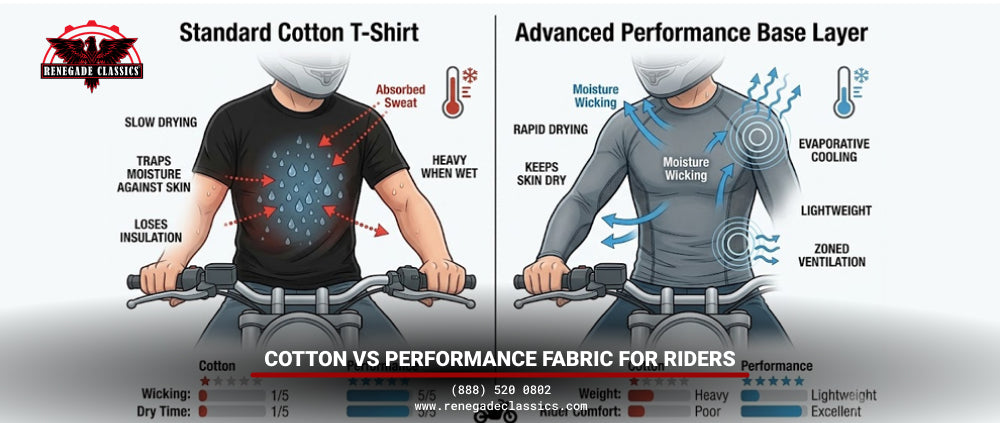
Cotton is hydrophilic. It absorbs moisture rather than repelling it. When a rider sweats in a cotton shirt, the cotton fabric absorbs that moisture and holds it against the skin rather than moving it outward.
On a motorcycle at speed, this matters less than it does in cycling because the airflow across the garment surface creates some evaporation regardless of the fabric type. At highway speeds, a cotton shirt still experiences significant evaporative cooling from the wind. The moisture management disadvantage of cotton compared to performance fabrics is most significant in:
- Stop-and-go traffic where airflow is minimal and the rider is sitting still in heat.
- Very hot and humid conditions where sweat production is high and evaporation is slow.
- Long sustained rides in heat where sweat accumulation over time becomes uncomfortable.
Temperature in Motion vs at a Stop
Cotton behaves differently when the motorcycle is moving versus when it is stationary. At speed, the airflow through a cotton shirt creates evaporative cooling that makes the fabric feel comfortable even when damp. At a stop in summer heat, a damp cotton shirt can feel heavy and warm as the evaporative cooling from airflow is removed.
This is the specific scenario where performance fabric provides the clearest advantage. A performance fabric shirt moves moisture outward and allows it to evaporate even in still air, while a saturated cotton shirt sits damp against the skin at a stop.
Comfort and Wearability
Cotton is softer and more comfortable against the skin than most synthetic performance fabrics. For riders who are sensitive to fabric texture or who wear shirts for long periods on and off the bike, the comfort advantage of cotton is real and relevant.
Cotton is generally less prone to static electricity than many synthetic fabrics in dry conditions, which reduces the clinginess that some riders find uncomfortable with synthetic shirts.
When Cotton Is the Right Choice
Cotton is appropriate for motorcycle riding when:
- You ride in moderate temperatures where heat and sweat are not significant factors.
- Your rides are primarily at speed rather than extended stops in traffic.
- You want a shirt that suits both riding and off-bike wear without looking like technical sporting gear.
- The shirt is the outer visible layer where cultural identity matters as much as technical function.
For the Harley and cruiser rider, these conditions describe most riding situations. This is why the biker culture riding wardrobe is predominantly cotton.
How Performance Fabrics Perform on a Motorcycle
Moisture-Wicking Properties
Performance fabrics such as polyester, nylon, and blended synthetics are hydrophobic. They repel water rather than absorbing it. Sweat is moved outward from the skin surface to the outer layer of the fabric where airflow and evaporation can remove it.
On a motorcycle, this moisture-wicking function is most valuable as a base layer worn under a cotton flannel or other outer shirt. The performance fabric base layer keeps sweat away from the skin surface, which improves comfort in hot weather across the full ride including stops.
Temperature Regulation
Performance fabrics dry faster than cotton because they do not absorb moisture into the fiber structure. This faster drying means that sweat is removed from the garment surface more quickly, which prevents the clammy feeling that a saturated cotton shirt produces when the motorcycle stops.
In cold weather, this same property means a performance fabric base layer does not hold cold moisture against the skin the way a cotton base layer does. A rider who sweats in a cotton base layer and then slows down or stops can experience rapid heat loss as the damp fabric draws warmth away from the body. A performance fabric base layer reduces this effect.
Where Performance Fabrics Fit in the Biker Wardrobe
In the Harley and cruiser riding wardrobe, performance fabrics serve best as base layers rather than outer shirts. The outer shirt is where biker culture identity lives. Graphic tees, flannels, leather shirts, and denim shirts are the visible layer that communicates riding identity. These are predominantly cotton or leather.
A performance fabric base layer worn under a cotton flannel improves moisture management without affecting the outer appearance or cultural identity of the outfit. This is the most practical application of performance fabric in the biker riding wardrobe.
For hot weather riding shirt options that incorporate performance fabric principles, see the hot weather motorcycle shirts guide.
Cotton-Synthetic Blends: The Middle Ground
Cotton-synthetic blends such as 60/40 or 50/50 cotton-polyester offer a practical middle ground for riders who want improved moisture management without moving fully to synthetic fabrics.
What blends provide:
- Improved drying time: The polyester component in the blend is hydrophobic and speeds up drying compared to 100% cotton. The shirt does not absorb and hold moisture as long as a pure cotton garment.
- Retained cotton feel: The cotton component maintains the soft, familiar feel against the skin that pure synthetics do not replicate. Many riders prefer blended fabrics precisely because they feel more like cotton than a fully synthetic shirt.
- Better shape retention: Polyester resists stretching and maintains garment shape through repeated washing better than 100% cotton. Blended graphic tees generally hold their shape better through repeated washing than equivalent pure cotton versions, and in many cases maintain print quality longer depending on the printing method used.
The trade-off with blends is that they do not provide the full moisture management of a pure performance fabric or the full comfort of pure cotton. They are a practical compromise for riders who want some improvement over pure cotton without moving fully to synthetic fabrics.
The Biker Culture Perspective on Fabric Choice
The Harley and cruiser riding community has a strong preference for natural materials. Cotton flannel shirts, leather, and denim define the visual and cultural identity of this riding community. Performance synthetic fabrics are associated with the sportsbike and athletic markets, which have a different aesthetic and riding culture.
This is not purely sentiment. Cotton and leather work well for the actual riding conditions of the Harley and cruiser rider who rides at moderate to highway speeds on roads rather than at the extreme performance edge of sportsbike riding. The technical moisture management advantages of performance fabrics matter more when physical exertion levels are higher and riding is more intense.
For the Harley rider who rides for the experience, the culture, and the identity rather than for athletic performance, cotton suits the context and the wardrobe in a way that synthetic fabrics do not replicate.
Fabric Choice by Riding Context
Summer Riding
For hot weather riding: A lightweight cotton or cotton-blend flannel, graphic tee, or sleeveless shirt as the outer layer with a moisture-wicking performance fabric base layer underneath if heat is significant. The performance base layer manages sweat against the skin. The cotton outer layer maintains the biker identity. This combination performs better than either fabric alone in hot conditions.
For the full summer riding shirt guide, see the hot weather motorcycle shirts guide.
Cold Weather Riding
For cold weather riding: A performance fabric or merino wool base layer against the skin, a cotton or cotton-blend flannel as the mid-layer, and a leather vest or jacket as the outer layer. In cold weather, the base layer must not hold moisture against the skin. A performance fabric or merino wool base layer provides warmth without the cold-damp problem that a cotton base layer creates when you stop and cool down.
For the full cold weather layering guide, see the how to layer motorcycle shirts guide.
Daily Commuting
For daily commuting: A cotton or cotton-blend flannel or riding shirt works for most daily commuting conditions. For commutes in heavy traffic in summer heat, a performance fabric base layer under the cotton outer shirt improves comfort at stops. The choice between pure cotton and a cotton blend depends on the temperature and the length of time spent in stop-and-go conditions.
Events and Rallies
For events and rallies: Cotton is the standard and culturally appropriate choice for biker events and rallies. Graphic tees, flannels, and identity shirts at events are almost universally cotton or cotton-blend. The cultural context of the event makes the cotton choice not just practical but correct. A performance synthetic shirt at a rally may feel less culturally aligned with the traditional biker event context than a cotton or cotton-blend option.
What to Read Next
- Best fabrics for motorcycle shirts in hot weather covers the specific fabric options that work best for summer riding, including which constructions provide the most comfort in heat.
- Flannel vs denim vs leather comparison covers the three main outer shirt fabric types for the Harley and cruiser rider with a direct comparison by riding context.
- Hot weather motorcycle shirts guide covers the full picture of summer riding shirt options including how to layer for heat management.
- How to layer motorcycle shirts guide covers the complete layering system for motorcycle riders across every season, with guidance on what each layer should do and what fabric works best at each level.
The Bottom Line
Cotton vs performance fabric for motorcycle riders is not a contest with a universal winner. Cotton suits the Harley and cruiser riding wardrobe for outer shirts across most riding conditions. Performance fabrics serve the base layer role most effectively, managing moisture against the skin in hot weather and preventing the cold-damp problem in cold weather.
The most practical approach for most biker culture riders is cotton outer shirts for identity and comfort paired with a performance fabric base layer when summer heat or cold weather layering makes moisture management at the skin level matter.
Browse motorcycle shirts and flannels at Renegade Classics for the full range of cotton and cotton-blend riding shirts across all shirt types.
Frequently Asked Questions
Is cotton good for motorcycle riding?
Yes, for most Harley and cruiser riding contexts. Cotton flannel shirts, graphic tees, and biker culture riding shirts work well for moderate temperature riding, event and rally wear, and daily riding in non-extreme heat. Cotton performs less well in stop-and-go summer traffic where sweat accumulates without the evaporative benefit of airflow, and in cold weather layering where a damp cotton base layer against the skin accelerates heat loss. For these specific contexts, a performance fabric base layer improves comfort significantly.
What are performance fabrics in motorcycle shirts?
Performance fabrics in motorcycle riding shirts are synthetic materials, primarily polyester and nylon blends, that are designed to move moisture away from the skin surface rather than absorbing it. They are hydrophobic, meaning they repel water rather than holding it. In the biker culture riding context, performance fabrics are most commonly found in base layer products worn under cotton outer shirts rather than in the outer shirt itself. Technical sportsbike shirts use performance fabrics as outer materials, but this is less common in the Harley and cruiser riding market.
Should I wear a performance fabric base layer under my flannel?
In summer heat or cold weather, yes. A lightweight moisture-wicking base layer under a cotton flannel significantly improves comfort in hot weather by moving sweat away from the skin before it saturates the flannel against your body. In cold weather, a performance fabric or merino wool base layer prevents the cold-damp problem that occurs when a cotton base layer gets damp from sweat and then draws heat away from the body when you slow down or stop. In moderate temperatures, a performance base layer is optional and many riders ride comfortably with cotton alone.
What is the best fabric for a motorcycle shirt in summer?
A lightweight cotton or cotton-blend flannel or tee as the outer visible layer, combined with a moisture-wicking performance fabric base layer underneath when heat is significant. The outer layer maintains biker culture identity. The base layer manages sweat at the skin level. Sleeveless or short sleeve cuts in the outer layer reduce fabric coverage and heat retention further. For the full breakdown of summer riding shirt options, the hot weather motorcycle shirts guide covers all options with honest guidance by temperature and riding context.
Are cotton-blend shirts better than pure cotton for riding?
For most riding contexts, a cotton-blend with 30 to 50 percent polyester performs better than pure cotton in terms of drying speed and shape retention. The polyester component helps move moisture outward and dries faster than pure cotton. The cotton component retains the soft feel and familiar look of a cotton shirt. For graphic tees particularly, blends hold print quality and garment shape better through repeated washing. For riders who want improved moisture management in their outer shirt without moving to fully synthetic fabrics, a quality cotton blend is a practical middle ground.


