

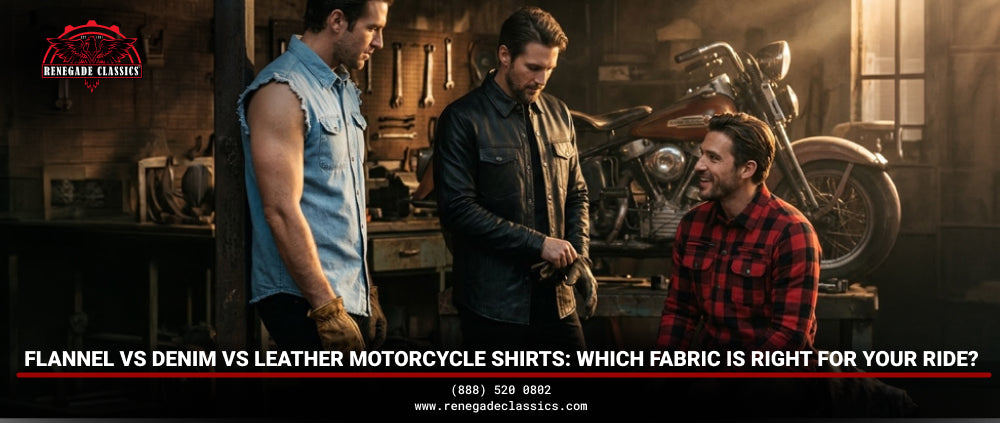
Key Takeaways
- Flannel, denim, and leather motorcycle shirts each serve different riding contexts. No single material is best for every rider or every ride.
- Flannel is the most breathable and comfortable option. Its protection depends entirely on whether it includes Kevlar or aramid lining and CE-certified armor. Without these, standard flannel fabric offers limited protection against road abrasion.
- Riding-weight denim with aramid fiber integration or heavyweight construction offers meaningful abrasion resistance. Standard fashion denim does not and should not be confused with purpose-built riding denim.
- Leather provides strong abrasion resistance and excellent wind protection. It is the heaviest, least breathable option and requires ongoing conditioning to maintain its protective properties.
- The right material depends on your riding speed, climate, and how often you ride. Most experienced riders own shirts in more than one material and choose based on conditions.
- All three materials are available in the biker culture riding market. Flannel and leather have the strongest cultural identity in the Harley and cruiser riding community.
Flannel vs denim vs leather motorcycle shirts is a question every rider eventually faces. Each material has a different protection profile, a different climate range, and a different place in biker culture. Understanding those differences before buying saves money and means you end up with the right shirt for the riding you actually do.
This guide compares the three materials honestly across the factors that matter: protection, climate, care, durability, and cultural identity. It then gives a direct verdict for each major riding context so you can make the right choice for your ride.
How the Three Materials Compare at a Glance
| Feature | Flannel (with Kevlar and CE Armor) | Denim (Riding Weight) | Leather |
|---|---|---|---|
| Abrasion Resistance | Low to Moderate (relies on liner) | Moderate to High (depends on construction) | Strong |
| Wind Resistance | Low | Moderate | Strong |
| Breathability | Strong | Moderate | Low (unless perforated) |
| Comfort and Flexibility | High | Moderate | Low initially, improves with wear |
| Summer Use | Good (lightweight) | Moderate (can be warm) | Poor without perforations |
| Cold Weather Use | Good as mid-layer | Good (3-season) | Excellent |
| Care Requirements | Machine washable (remove armor) | Machine washable generally | Wipe clean, condition regularly |
| Cultural Identity | Classic biker culture | Worker and builder culture | Traditional hardcore riding |
The sections below explain what each row in this table means in practical terms for riders.
Flannel Motorcycle Shirts
Flannel is the most widely worn shirt material in the Harley and cruiser riding community. It is comfortable, breathable, and available in a wide range of styles and constructions from basic casual wear to fully armored riding gear.
Protection
Standard cotton flannel fabric has limited abrasion resistance. The protection profile of a flannel motorcycle shirt depends on whether it includes additional protective features.
A flannel with CE-certified armor inserts at the shoulders and elbows and Kevlar or aramid lining at the joint zones is genuine protective riding gear. A flannel without these features is a style-first garment with the construction quality of a riding shirt but not the protection of one.
This is the most important distinction in the flannel category. When comparing flannel to denim or leather for protection, the correct comparison is armored flannel versus those materials, not standard flannel fabric versus them.
Climate Range
Flannel is the most breathable of the three materials. Lighter-weight flannels work well in warm weather, particularly sleeveless options or short sleeve cuts. Heavier flannels work as mid-layers in cool weather under a vest or jacket. Across seasons, the flannel shirt is the most versatile of the three materials in terms of temperature range.
Flannel does not provide meaningful wind blocking on its own. At highway speeds in cold conditions, it needs an outer layer for wind protection.
Care
Flannel motorcycle shirts are machine washable. Remove CE armor inserts before washing. Use cold water and a gentle cycle. Air dry rather than using a tumble dryer. Standard laundry care for the flannel itself, with the additional step of armor removal.
Best For
Urban commuting, casual road riding, events and rallies, warm and moderate weather, and riders who want the classic Harley and cruiser riding look with the option of adding CE armor protection.
For the complete buying guide to motorcycle flannel shirts, see the motorcycle flannel buying guide.
Denim Motorcycle Shirts
Denim motorcycle shirts occupy a specific position between flannel and leather. They carry the visual weight of a workwear garment, are more durable than standard flannel, and work across a wider temperature range than leather.
Protection
There is a significant difference between standard fashion denim and riding-weight denim. Standard fashion denim provides limited abrasion resistance in a slide. Purpose-built riding denim uses heavier fabric weight, tighter weave construction, or the integration of protective materials such as aramid fibers woven into the denim structure.
Riding denim that incorporates aramid fiber integration or heavyweight construction can provide meaningful abrasion resistance that standard denim does not. Some riding denim shirts also include CE armor pockets. When buying denim for riding, check specifically for these protective features rather than assuming any denim shirt provides riding-grade protection.
Climate Range
Denim is a reasonable three-season option for most riders. It is warmer than flannel due to its denser construction but breathes better than leather. In summer heat, denim can become uncomfortable in stop-and-go traffic. Some riding denim shirts include zippered vents to improve airflow in warm conditions. In cold weather, denim works well as an outer layer in mild to moderate cold.
Care
Most denim motorcycle shirts are machine washable. Follow the care label on the specific garment. Cold water and a gentle cycle is the standard approach. Air dry to prevent shrinkage and maintain fabric structure. If the denim includes aramid fiber integration, check the care label for any specific instructions for the protective material.
Best For
Riders who want a workwear and builder aesthetic, three-season riding in moderate climates, and riders who want more abrasion resistance than standard flannel without the weight and care requirements of leather.
For a full guide to men's denim motorcycle shirts including what makes a good one and how to style it, see the men's denim motorcycle shirts guide.
Leather Motorcycle Shirts
Leather motorcycle shirts are among the most protective shirt materials available in the biker apparel market and the most demanding in terms of care and maintenance. They represent a significant investment and require ongoing conditioning to maintain their protective properties.
Protection
Leather provides strong abrasion resistance and meaningful wind protection as a shirt material. Full-grain cowhide leather in garment weight provides a durable outer surface that generally performs better in a slide than unlined cotton, standard denim, or flannel fabric.
Leather does not provide CE-certified impact protection on its own. A leather shirt without armor inserts protects against abrasion but not against the impact force at the joints in a fall. For full protection, a leather shirt with CE armor pockets and certified inserts combines both protection types.
Climate Range
Leather is the strongest cold weather option of the three materials. It blocks wind effectively, provides thermal insulation, and does not allow cold air to penetrate in the way that flannel or denim does. In summer, standard leather is uncomfortable due to its low breathability. Perforated leather improves airflow significantly and makes leather more viable in warm weather, though it remains warmer than flannel or denim.
Care
Leather motorcycle shirts are not washed in water. Wipe down with a clean damp cloth to remove surface dust and grime. Apply leather conditioner designed for garment leather regularly to keep the hide supple and maintain its protective properties. Dry leather can crack and lose structural integrity over time. Store on a wide hanger in a cool, dry location away from direct sunlight. Never use household cleaners, harsh solvents, or heat sources to dry leather.
Best For
Cold weather riding, highway and touring riding, riders who prioritize abrasion protection in a shirt format, and riders who are comfortable with the maintenance requirements and willing to invest in the initial cost.
For the full guide to men's leather motorcycle shirts including care, conditioning, and when leather is the right choice, see the men's leather motorcycle shirts guide.
The Verdict by Riding Context
Best for Summer Riding
Flannel wins. A lightweight flannel, particularly a sleeveless or short sleeve armored option, provides the best comfort in summer heat while keeping CE armor available. Denim is manageable in moderate summer temperatures with venting. Leather is the poorest summer choice unless perforated.
Best for Cold Weather Riding
Leather wins for the outer layer. Leather's wind blocking and thermal properties make it the strongest cold weather shirt material. A flannel mid-layer under a leather vest or jacket is the most effective cold weather combination for biker culture riders.
Best for Daily Urban Commuting
Armored flannel wins. For daily urban commuting at moderate speeds, a CE-armored flannel provides meaningful protection in a comfortable, machine-washable garment that works across most of the year. Denim is a solid alternative for riders who prefer the aesthetic. Leather is manageable for commuting in cooler weather but impractical in summer.
Best for Highway Riding
Leather or armored denim for maximum protection. At sustained highway speeds, leather provides the strongest abrasion protection of the three materials in a shirt format. Riding-weight armored denim is a practical alternative that provides meaningful protection with better breathability. An armored flannel at highway speeds is better than nothing but provides less outer surface abrasion resistance than leather or riding denim.
Best for Events and Rallies
Flannel wins for identity and versatility. The classic flannel shirt is the most recognized riding identity garment in the Harley and cruiser community. At events and rallies where comfortable wear across variable conditions matters more than maximum protection, flannel is the practical and culturally appropriate choice.
Can You Own All Three?
Yes, and most experienced riders eventually do. The three materials serve different contexts that are not well covered by any single shirt type.
- A flannel or two for everyday riding, casual use, and event wear across spring, summer, and fall.
- A riding-weight denim shirt for the cooler riding days where the flannel is not quite enough and leather is too heavy.
- A leather shirt for cold weather riding and situations where maximum protection in a shirt format is the priority.
Building this wardrobe over time rather than all at once allows you to buy quality in each category rather than compromising on construction to buy all three at once.
For the full guide to denim and leather shirt materials, styles, and when each makes sense, see the motorcycle denim and leather shirts guide.
What to Read Next
- Motorcycle flannel buying guide covers every feature to check before buying any motorcycle flannel across all price tiers, from fabric weight to CE armor levels.
- Men's denim motorcycle shirts guide covers what makes a good riding denim shirt, the difference between fashion denim and riding denim, and how to style it.
- Men's leather motorcycle shirts guide covers why serious riders choose leather, how to care for it, and when leather is the right choice for your riding.
- Motorcycle denim and leather shirts guide covers materials, styles, and the specific contexts where denim and leather each make the most sense.
- Cotton vs performance fabric for riders covers how standard cotton compares to performance fabrics in the riding shirt context.
The Bottom Line
Flannel, denim, and leather motorcycle shirts each have a specific place in the riding wardrobe. Flannel is the most versatile, breathable, and culturally embedded material for the Harley and cruiser rider across most riding conditions. Riding-weight denim provides more abrasion resistance with the workwear aesthetic. Leather provides the strongest protection and wind blocking at the cost of breathability and care requirements.
The right answer for most riders is not a single material but a combination that covers the range of conditions you actually ride in. Start with the material that fits most of your riding and add the others as your riding wardrobe develops.
Browse motorcycle shirts and flannels at Renegade Classics for the full range across all three materials.
Frequently Asked Questions
Is flannel or leather better for motorcycle riding?
It depends on your riding context. Leather provides stronger abrasion resistance and wind blocking, making it better for cold weather and highway riding where protection is the priority. Flannel is more breathable, comfortable, and versatile across temperature ranges, making it better for everyday riding, summer use, and casual riding. A CE-armored flannel provides certified impact protection that a leather shirt without armor does not. The best answer for most riders is both, used in different conditions.
Is denim good for motorcycle riding?
Purpose-built riding denim is a legitimate riding shirt material. Standard fashion denim is not. The distinction is construction: riding denim uses heavier fabric weight, tighter weave, or aramid fiber integration that provides meaningful abrasion resistance. Fashion denim uses lighter construction optimized for appearance rather than protection. When buying denim for riding, check specifically for riding-specific construction features rather than assuming any denim shirt provides adequate protection.
Which motorcycle shirt material is most breathable?
Flannel is the most breathable of the three materials, particularly in lighter weight and sleeveless constructions. Denim is moderately breathable depending on weave density and whether the shirt includes ventilation features. Leather is the least breathable, though perforated leather improves airflow significantly. For summer riding, flannel is the clear winner on breathability.
Which lasts longest: flannel, denim, or leather?
A well-maintained leather shirt generally lasts longest of the three materials when properly conditioned and stored. Leather conditioned regularly and stored correctly can last for many years of regular use. Riding-weight denim is also very durable under regular use. Standard flannel wears faster than either under the same conditions, though quality construction and proper care extend its life significantly. The care requirements of leather are the trade-off for its durability.
What is the best motorcycle shirt material for a beginner?
A CE-armored flannel is the best starting point for most beginner riders. It provides certified impact protection in a comfortable, breathable, and machine-washable garment that works across most riding conditions. It is available at accessible price points, requires straightforward care, and fits the biker culture identity that most new riders are building. As your riding develops, adding a riding-weight denim shirt and eventually a leather option gives you the full material range.


