

Key Takeaways
- Motorcycle denim and leather shirts serve different riding contexts and different rider identities. Denim suits three-season riding with a workwear aesthetic. Leather suits cold weather and high-speed riding where abrasion protection is the priority.
- Not all denim is riding denim. Standard fashion denim provides limited protection in a slide. Purpose-built riding denim uses heavier fabric weight, tighter weave, or integrated protective materials. Always check construction before buying denim for riding use.
- Leather shirt grade matters. Garment-weight leather varies in thickness and hide quality. Full-grain leather from cattle hide is the most common and appropriate choice for a motorcycle leather shirt. Thinner or split leather provides less abrasion resistance.
- Neither denim nor leather provides CE-certified impact protection on its own. Both require CE armor inserts in dedicated pockets to add impact protection at the key joint zones.
- Leather shirts require conditioning to maintain protective properties. Dry leather loses suppleness and can crack. A leather shirt that is not maintained is not as protective as one that is.
- Both materials pair naturally with the Harley and cruiser riding aesthetic. Denim works with the builder and workwear identity. Leather communicates traditional biker culture.
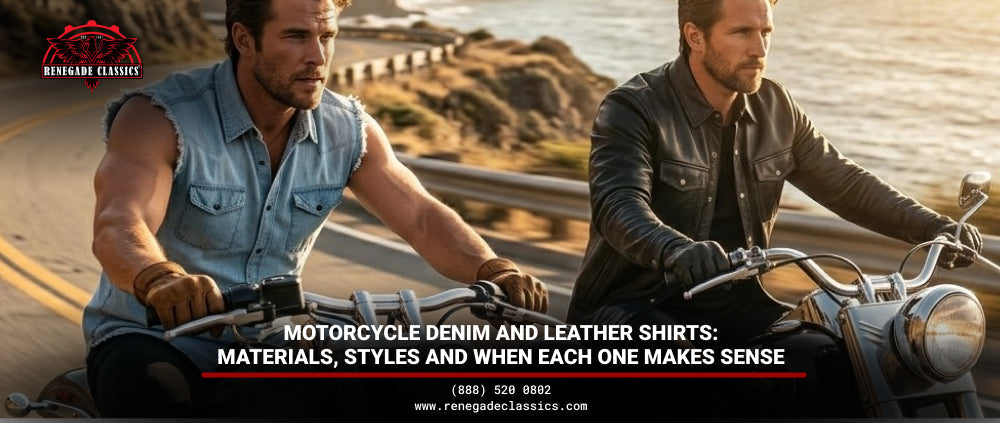
Motorcycle denim and leather shirts occupy a specific position in the riding wardrobe. They provide more visual weight and more abrasion resistance than flannel, sit between flannel and a full jacket in terms of protection and heat management, and carry strong cultural identity in the Harley and cruiser riding community.
This guide covers what motorcycle denim and leather shirts are made from, what construction features to look for in each, the styles available, when each one makes sense, and how to care for both. It applies specifically to the biker culture rider who wants genuine riding quality rather than fashion imitations of either material.
For the full material comparison including flannel, see the flannel vs denim vs leather comparison.
Why Denim and Leather Occupy a Different Space from Flannel
Flannel is the most widely worn shirt material in biker culture for good reason. It is comfortable, breathable, and works across a wide range of conditions. Denim and leather exist alongside flannel in the riding wardrobe because they offer things flannel does not.
- More abrasion resistance in the outer fabric. Riding-weight denim and full-grain leather both provide more abrasion resistance per layer of outer fabric than standard cotton flannel. For riders who want more protection from the outer shell rather than relying entirely on inner aramid lining, these materials offer a stronger starting point.
- Different visual identity. Denim carries a workwear and builder culture aesthetic. Leather carries the traditional hardcore riding identity. Both communicate different things in the riding community than a flannel shirt does, and riders choose between them based on which identity fits their riding style.
- Different temperature profiles. Denim is a reliable three-season material. Leather is the strongest cold weather option. Both fill gaps that flannel does not cover as effectively.
Motorcycle Denim Shirts
What Makes Riding Denim Different from Fashion Denim
The gap between fashion denim and riding denim is significant. Standard fashion denim is constructed for appearance. It uses lighter fabric weight, looser weave, and soft finishing treatments that make it comfortable and flexible but reduce its abrasion resistance in a slide.
Purpose-built riding denim addresses this through one or more of three approaches:
- Heavier fabric weight: Riding denim typically uses heavier fabric than standard jeans or fashion denim shirts. The additional weight comes from denser yarn construction that provides more material between the rider and the road in a slide.
- Tighter weave construction: A tighter weave resists tearing and abrasion better than a looser weave at similar fabric weights. Some riding denim uses twill weaves or specific construction techniques that improve abrasion performance compared to standard denim weave.
- Protective material integration: Some riding denim integrates aramid fibers, high-tenacity synthetic fibers, or other protective materials into the weave itself rather than using them only as inner liner patches. This approach distributes the protective material through the fabric rather than concentrating it at specific zones.
When evaluating any denim shirt for riding use, check the product description for specific mention of these construction features. A denim shirt that simply says "motorcycle denim" without describing its construction approach is not necessarily purpose-built for riding.
Denim Construction Grades for Riding
Riding denim shirts generally fall into two construction approaches:
- Standard riding weight with CE armor pockets: A heavier denim outer shell with dedicated CE armor pockets at the shoulders and elbows. The protection comes primarily from the CE armor inserts. The denim outer provides some additional abrasion resistance from its heavier construction.
- Reinforced riding denim with integrated protection: Denim that incorporates aramid fibers or other protective materials into the fabric structure, combined with CE armor pockets. This approach provides both abrasion resistance from the outer fabric and impact protection from the CE inserts.
The second approach provides more comprehensive protection but costs more. For riders who use the denim shirt for regular road riding, the additional investment is justified. For riders who want a denim shirt primarily for its look and casual riding, the first approach is appropriate.
Styles Available in Motorcycle Denim Shirts
Motorcycle denim shirts are available in several cuts and constructions that suit different riding and off-bike contexts:
- Classic work shirt cut: A straight-cut denim shirt with a spread or button-down collar, chest pockets, and a relaxed body fit. This is the most common motorcycle denim shirt style and the one most closely connected to the builder and workwear aesthetic in biker culture.
- Western cut: A denim shirt with Western-style front and back yokes, snap closures, and sometimes embroidered details. This style bridges the Western heritage element of American biker culture with the denim material category.
- Utility cut with multiple pockets: A more functional riding-specific cut with additional pockets, reinforced stress seams, and extended back hem for riding posture. This style prioritizes function over classic aesthetic.
Browse men's denim shirts at Renegade Classics for the full range of motorcycle denim shirt styles.
When Denim Makes Sense
Denim is the right choice when:
- You want a shirt with more visual weight and durability than flannel without the care requirements of leather.
- You ride primarily in three-season conditions where denim's temperature range covers most of your riding.
- Your riding identity is closer to the builder, worker, or classic American style aesthetic than traditional hardcore biker.
- You want a shirt that transitions naturally from riding to off-bike wear without signaling riding gear specifically.
Denim is not the best choice when:
- You ride in genuine summer heat where denim's warmth becomes uncomfortable.
- You need maximum cold weather protection where leather's wind blocking and insulation is the stronger choice.
How to Style a Motorcycle Denim Shirt
A motorcycle denim shirt works in several outfit combinations for the Harley and cruiser rider:
- Open over a plain white or black tee with jeans and boots. The denim shirt as the outer visible layer in warm weather.
- Under a leather vest for the classic denim-and-leather combination that has strong roots in biker culture.
- Over a lighter base layer in cooler weather as a mid-layer under a leather jacket.
- Worn closed and tucked for a cleaner workwear look off the bike.
For the full guide to men's denim motorcycle shirts including detailed style guidance, see the men's denim motorcycle shirts guide.
Motorcycle Leather Shirts
What Makes a Leather Shirt Different from a Leather Jacket
A motorcycle leather shirt is cut as a shirt rather than a jacket. It has the construction and silhouette of a shirt, typically with a collar, button or snap closure front, and shirt-length hem. It is not a jacket in lighter leather.
The practical differences from a leather jacket:
- A leather shirt is lighter than a full leather jacket in most cases, with a softer drape and more shirt-like flexibility.
- A leather shirt does not typically include the structural panels, reinforced collar, and heavy hardware of a full motorcycle jacket.
- A leather shirt works better in mild to moderate cold where a full jacket would be too warm or too formal for the riding context.
- A leather shirt can be worn as a standalone outer layer in cool weather or as a layering piece in cold weather under a full jacket.
Leather Grades and What They Mean for Riding
Not all leather is the same. The grade of leather affects both the look and the protective properties of a motorcycle leather shirt.
- Full-grain leather: The highest grade. Uses the full thickness of the hide with the natural grain surface intact. Full-grain leather is generally the most durable and abrasion-resistant of the common leather grades used in garments. It develops a natural patina over time and is the appropriate choice for a leather shirt intended for riding use.
- Top-grain leather: The second grade. The top surface of the hide is sanded or buffed to remove imperfections, then a finishing coat is applied. Top-grain leather is uniform in appearance but thinner and less durable than full-grain. It is commonly used in mid-range leather garments.
- Split leather and bonded leather: Lower grades. Split leather is made from the inner layers of the hide remaining after the top grain is separated. Bonded leather is made from leather scraps bonded with adhesive. Neither is appropriate for a motorcycle shirt intended for riding protection. These grades are used in fashion garments where appearance rather than durability is the priority.
For a riding leather shirt, look for full-grain or top-grain leather with the hide type and grade specified in the product description. A leather shirt that does not disclose the leather grade should be treated as fashion leather until verified otherwise.
Styles Available in Motorcycle Leather Shirts
Motorcycle leather shirts are available in several styles that suit different riding contexts and aesthetic preferences:
- Classic biker leather shirt: A black or dark leather shirt with snap closures, chest pockets, and sometimes seam detailing on the shoulders and chest. This is the most traditional motorcycle leather shirt style and the most recognizable in the Harley and cruiser riding community.
- Western cut leather shirt: Similar to the Western denim shirt in cut but in leather. Front and back yokes, snap closures, and a silhouette that references American Western heritage. Works particularly well with the vintage Harley aesthetic.
- Utility leather shirt with armor pockets: A leather shirt with dedicated CE armor pockets at the shoulders and elbows. This style adds CE-certified impact protection to the leather's abrasion resistance for the most comprehensive protection available in a shirt format.
Browse men's leather shirts at Renegade Classics for the full range of motorcycle leather shirt styles.
When Leather Makes Sense
Leather is the right choice when:
- You ride in cold weather where leather's wind blocking and thermal insulation is the strongest available in a shirt format.
- You want the traditional biker culture identity that leather communicates in the riding community.
- You ride at higher speeds regularly and want the outer shell abrasion resistance that leather provides.
- You are willing to invest in the initial cost and ongoing conditioning that a quality leather shirt requires.
Leather is not the best choice when:
- You ride in summer heat where leather's low breathability becomes a comfort issue.
- You want a shirt you can machine wash. Leather requires wipe-down and conditioning care, not laundering.
- You are looking for a casual event or rally shirt where a flannel or denim is a more practical and lower-risk choice.
How to Style a Motorcycle Leather Shirt
A motorcycle leather shirt works across several outfit combinations:
- Open over a graphic biker tee with jeans and boots. The leather shirt as the statement outer layer.
- Closed as the primary shirt layer under a leather vest for a full-leather biker combination.
- As an outer layer in mild cold over a lightweight base layer or thermal, without a jacket.
- As a mid-layer under a full leather jacket in cold weather for maximum layering warmth.
For the complete guide to men's leather motorcycle shirts including style guidance and care details, see the men's leather motorcycle shirts guide.
Denim vs Leather: A Direct Comparison for Riding Use
For riders choosing between the two materials for a specific purchase, here is the direct comparison across the key factors:
- Abrasion resistance: Full-grain leather generally provides more abrasion resistance than standard riding denim. Riding denim with integrated protective materials narrows this gap significantly. Standard fashion denim provides limited abrasion resistance and should not be compared to either.
- Temperature range: Denim is the better three-season choice. It breathes better than leather in warmer conditions and provides adequate wind resistance in cool weather. Leather is the stronger choice in genuine cold where wind blocking and insulation matter most.
- Weight and comfort: Denim is lighter and more flexible than leather from the first wear. Leather is stiffer initially and requires a break-in period before it conforms to the rider's shape and movement.
- Care requirements: Denim is machine washable in most cases. Leather requires wipe-down cleaning and regular conditioning. For riders who want low-maintenance gear, denim is the practical choice.
- Cost: Quality riding denim is generally less expensive than quality garment leather. The cost difference reflects both material costs and the potentially longer lifespan of well-maintained leather.
- Cultural identity: Denim signals builder, workwear, and classic American culture. Leather signals traditional hardcore biker culture. Both are legitimate and recognized in the Harley and cruiser riding community.
Care Guide: Denim and Leather Side by Side
Caring for Your Motorcycle Denim Shirt
- Machine wash in cold water on a gentle cycle. Hot water can cause shrinkage and weaken the fabric structure over time.
- If the shirt includes aramid fiber integration, check the care label for specific washing instructions for the protective material.
- Air dry rather than tumble drying. High heat in a dryer can cause shrinkage and weaken seam construction over time.
- Turn inside out before washing to reduce surface abrasion on the outer fabric during the wash cycle.
- Remove CE armor inserts before washing if the shirt includes armor pockets.
Caring for Your Motorcycle Leather Shirt
- Do not machine wash or submerge in water. Water can disrupt the fiber structure of leather and cause stiffness and cracking as it dries.
- Wipe down with a clean, slightly damp cloth after riding to remove surface dust and road grime. Allow to air dry naturally away from direct heat.
- Apply a leather conditioner designed for garment leather every few months, or more frequently if the leather is exposed to rain or extreme heat. Conditioning helps maintain the leather's flexibility and prevents it from drying out.
- Store on a wide hanger in a cool, dry location away from direct sunlight. Sunlight and heat accelerate leather drying.
- Do not store in plastic bags. Plastic traps moisture. Use a breathable fabric garment bag if dust protection is needed for long-term storage.
What to Read Next
- Men's denim motorcycle shirts guide covers what makes a good riding denim shirt in detail, how to identify riding-grade construction, and how to style denim for different riding and off-bike contexts.
- Men's leather motorcycle shirts guide covers why serious riders choose leather, the specific care and conditioning process, and when leather is the right choice for your riding style and conditions.
- Flannel vs denim vs leather comparison covers all three shirt materials in a direct comparison organized by protection, climate, care, and riding context with a verdict for each use case.
The Bottom Line
Motorcycle denim and leather shirts are two distinct material choices that serve different riders in different conditions. Denim is the more versatile everyday option with a three-season range, lower care requirements, and a workwear aesthetic that suits the builder and classic Harley rider. Leather is the stronger cold weather and high-speed option with greater abrasion resistance, higher care requirements, and the traditional biker culture identity.
In both cases, the quality of the specific garment matters as much as the material itself. Purpose-built riding denim is not the same as fashion denim. Full-grain garment leather is not the same as split or bonded leather. Check the construction and material grade before buying in either category.
Browse men's denim shirts and men's leather shirts at Renegade Classics for the full range of motorcycle denim and leather shirt options built for the Harley and cruiser rider.
Frequently Asked Questions
Are motorcycle denim shirts protective?
Purpose-built riding denim with heavier construction, tighter weave, or integrated protective materials provides meaningful abrasion resistance that standard fashion denim does not. Standard fashion denim has limited abrasion resistance and should not be used as a substitute for riding-grade apparel. When buying a denim shirt for riding use, check for specific mention of riding-grade construction or protective material integration in the product description. CE armor pockets with certified inserts add impact protection that the denim fabric alone does not provide.
What leather grade is best for a motorcycle shirt?
Full-grain leather is the most appropriate choice for a motorcycle leather shirt intended for riding use. It uses the full thickness of the hide with the natural grain surface intact, providing the most durable and abrasion-resistant leather construction. Top-grain leather is the second option and is commonly used in mid-range leather garments. Avoid split leather or bonded leather for riding use. Always look for the leather grade specified in the product description rather than assuming the quality from the price or appearance alone.
Can I wear a motorcycle denim shirt in summer?
Riding denim is manageable in moderate summer temperatures. In genuine summer heat, particularly in stop-and-go traffic, denim can become uncomfortable due to its denser construction compared to flannel. Some riding denim shirts include zippered vents to improve airflow in warm conditions, which extends their usable temperature range. For very hot weather, a lighter flannel or sleeveless option is more comfortable. For mild summer days and cooler summer evenings, a well-constructed riding denim shirt is a practical choice.
How do I care for a leather motorcycle shirt?
Do not machine wash leather. Wipe down with a clean, slightly damp cloth after riding to remove surface grime. Allow to air dry away from direct heat. Apply a garment leather conditioner every few months to help maintain the leather's flexibility and prevent it from drying out. Store on a wide hanger in a cool, dry location away from direct sunlight. Use a breathable fabric garment bag rather than plastic for long-term storage. A leather shirt that is not conditioned regularly will dry out and lose suppleness, which affects both comfort and protective properties over time.
Which is better for riding: denim or leather shirt?
It depends on your riding conditions and priorities. Leather provides more abrasion resistance per layer and stronger wind blocking, making it the better choice for cold weather and higher-speed riding. Denim provides more breathability, lower care requirements, and a wider temperature range, making it the better everyday choice for three-season riding. Most experienced riders own both and choose based on conditions. If you can only start with one, riding denim is the more versatile starting point for most riding contexts. Leather becomes the priority when cold weather riding or maximum shirt-level protection is the specific need.


